Understand Your Purifier
The honest guide to knowing how your water is made, dodging technician service scams, and fixing everyday purifier issues with your own hands
Most people buy a purifier, mount it on the kitchen wall, and forget about it until the water stops flowing or a technician demands thousands of rupees for replacement parts. But you don't need an engineering degree to understand what goes inside that cabinet. When you know the basics, you protect your family from contaminated water, save thousands on unnecessary service visits, and spot fake duplicate filters from a mile away.
Your Purifier Is a Team of Filters Working in Sequence
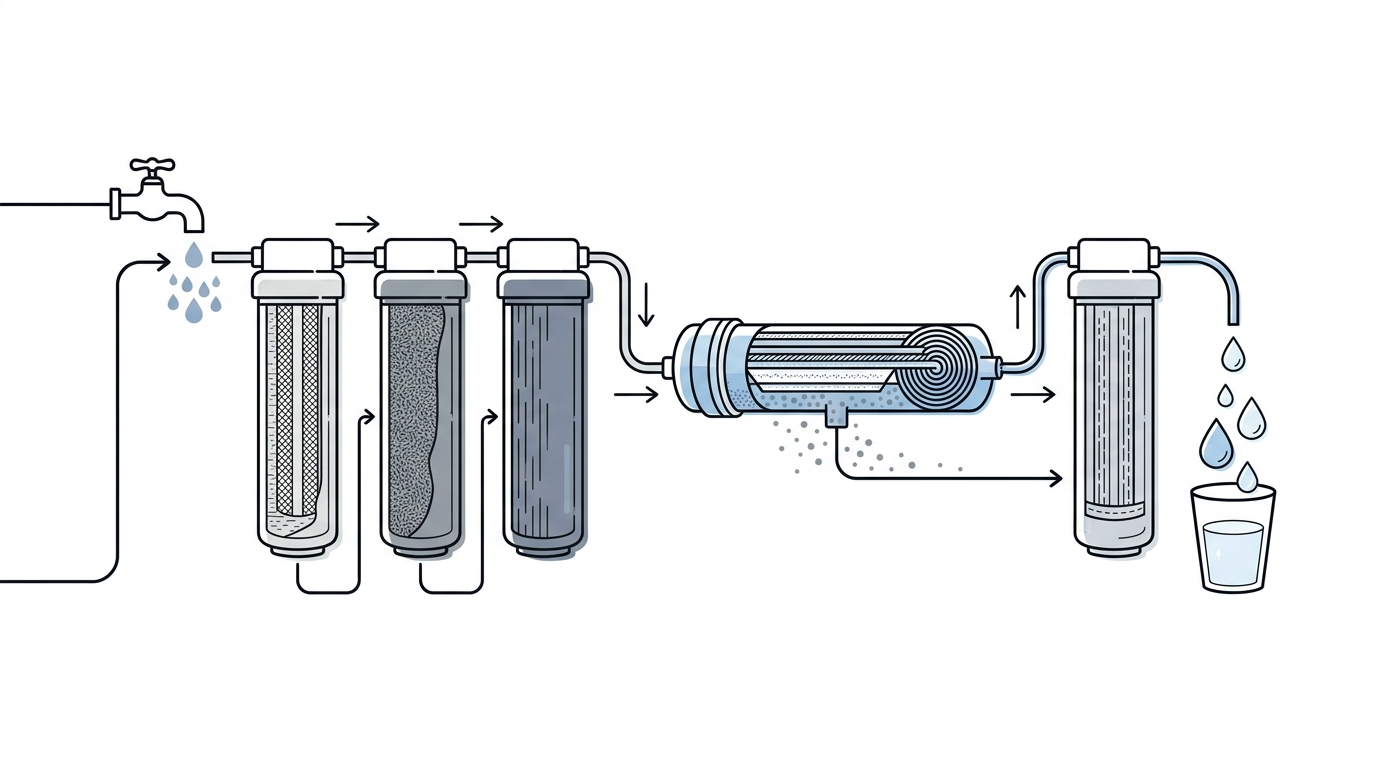
People often ask, "Which single filter cleans my water?" The answer is none of them do it alone. A home purifier is an engineered relay team where every single cartridge catches what the previous one was designed to let through. If one player in the chain is neglected or low quality, the entire system breaks down prematurely.
The Spun Polypropylene Pre-Filter
This is the big white candle hanging on your kitchen wall. It acts as the frontline bodyguard, arresting heavy mud, sand, algae, and flaking pipe rust before they ever touch your machine. If you don't change this when it turns muddy brown, all that sludge rushes straight into your expensive internal pump.
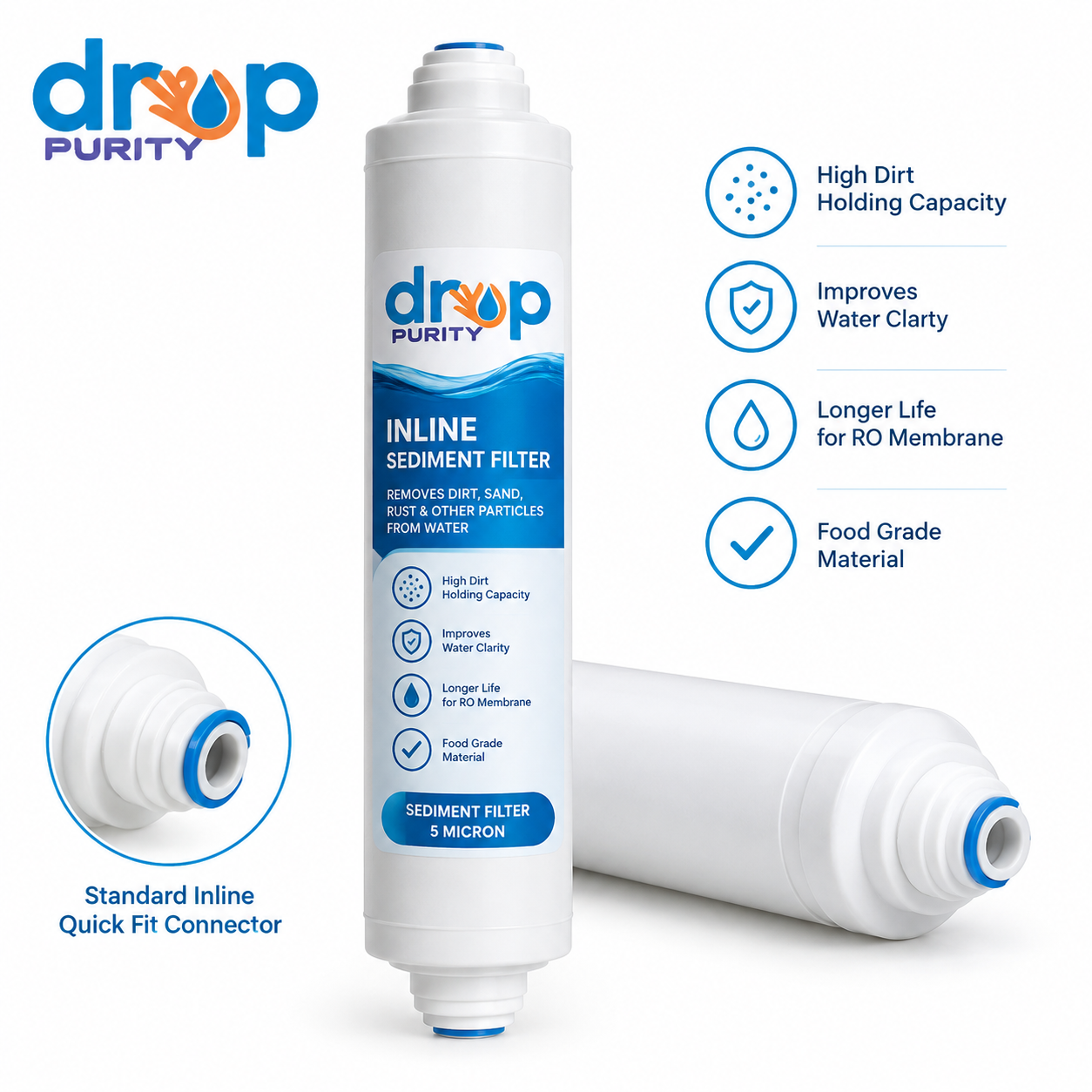
5-Micron Inline Sediment Filter
Mounted snugly inside the cabinet. Water that looks clear to the human eye still carries microscopic silt flakes. This tightly packed 5-micron spun matrix traps fine silt particles so they don't blind the microscopic pores of your carbon filter.
Activated Carbon Block (~1000 IV)
Municipal water contains chlorine added to kill bacteria in pipes. But chlorine is fatal to delicate RO membranes, chemically burning holes in them within weeks. High-grade coconut shell carbon acts like an atomic sponge, pulling chlorine, pesticides, and foul tastes completely out of the water.
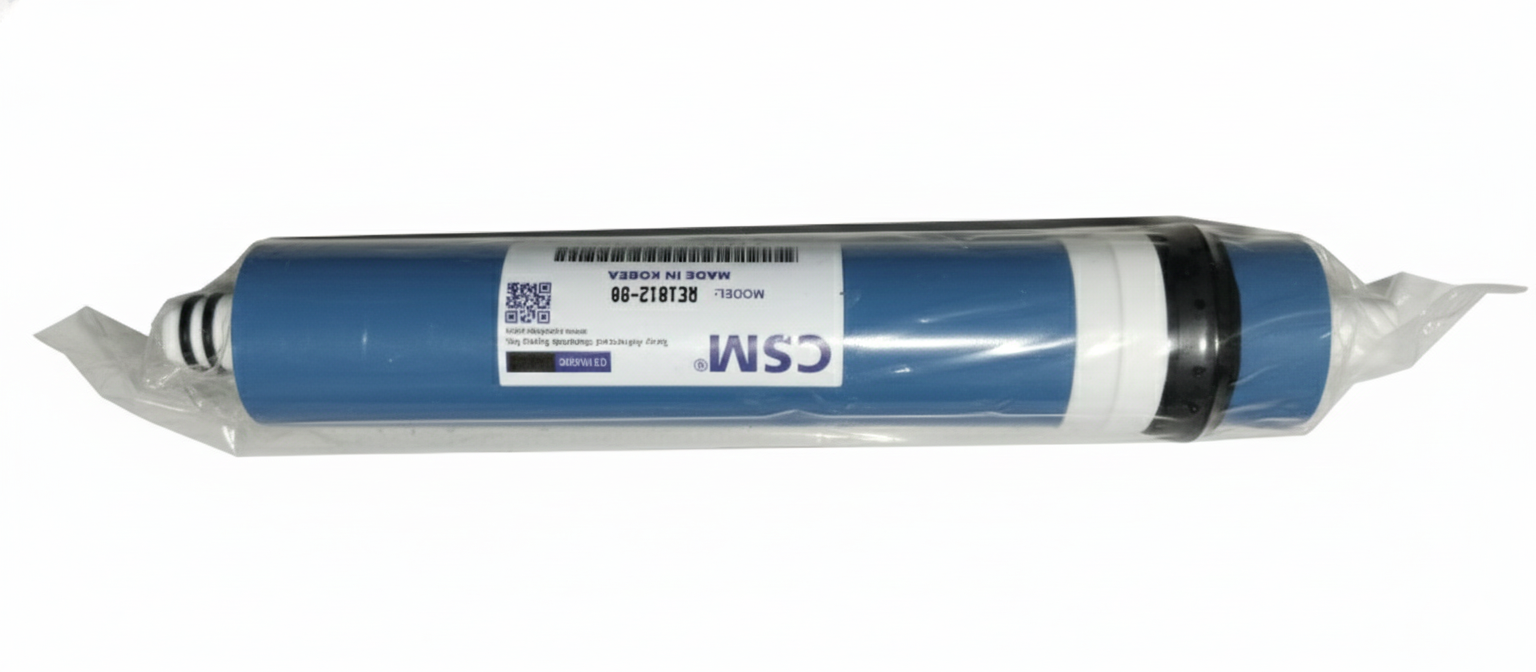
Booster Pump & 0.0001µm RO Membrane
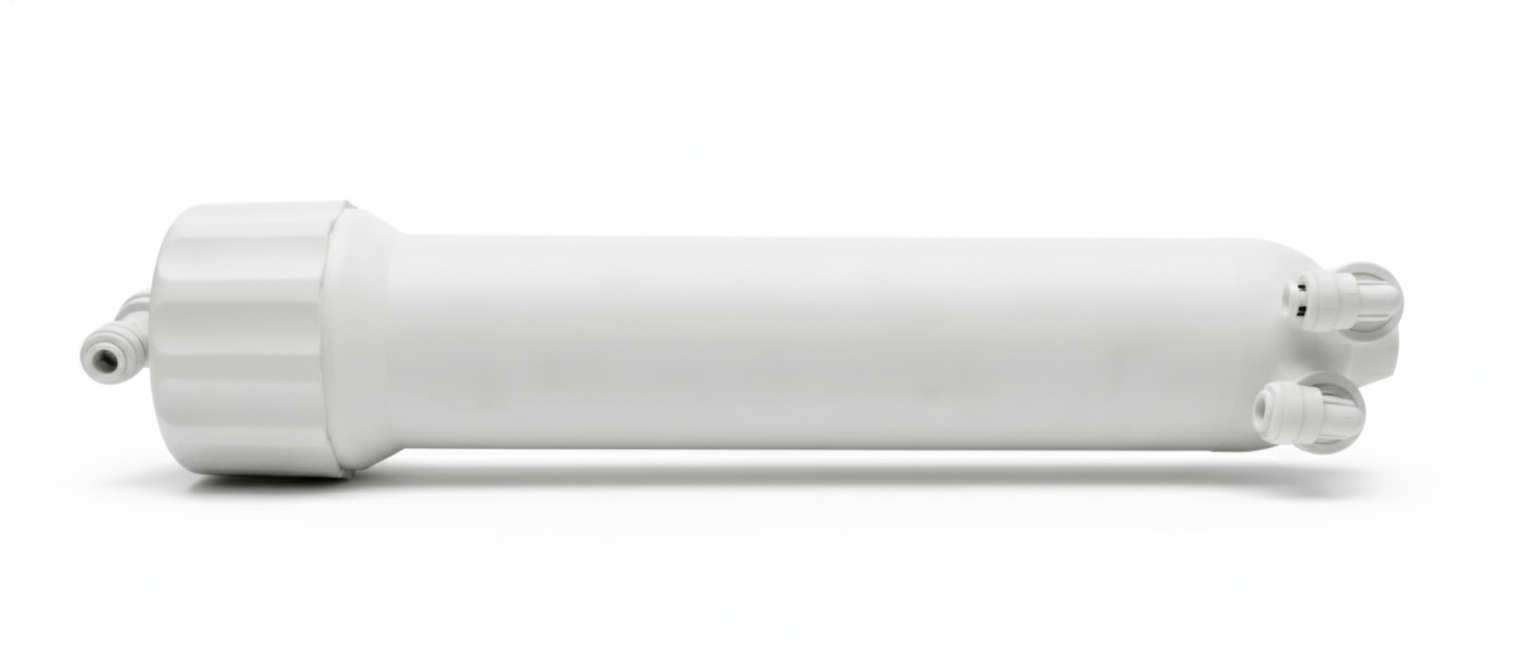
This is where real reverse osmosis happens. The 24V booster pump builds high pressure (70 to 100 PSI) to force water through spiral-wound sheets with pores so tiny (0.0001 micron) that only pure water molecules can squeeze through. Dissolved heavy metals, lead, arsenic, and excess salts are flushed out through the reject pipe.
Post-Carbon Polisher & Mineral Infuser
Water stored inside sealed plastic tanks can sometimes pick up a flat or slightly stale taste. This final polishing cartridge contains silver-impregnated coconut carbon that refines taste right before the water flows out of your tap, ensuring every glass tastes naturally crisp and sweet.
The Flow Restrictor (FR 450)
A tiny plastic cylinder on the reject pipe that controls back-pressure against the membrane. If this ₹40 part gets clogged with silt, your pump strains and overheats. If it gets loose, water bypasses without filtration. Always swap this tiny component whenever you change your membrane.
4 Common Water Purifier Scams (And How to Protect Yourself)
Service technicians often take advantage of homeowners because the inside of a water purifier looks complicated. Here are the 4 most frequent service tricks used across Indian households and the exact questions to ask to shut them down.

The 'Black Sludge' Water Electrolyzer Trick
A visiting technician pulls out a small gadget with two metal rods, dips them into your tap water, and plugs it in. Within 30 seconds, your water turns into a horrific bubbling black sludge. The technician claims, "Look at this poison, your water has heavy toxins, you must change all filters right now!"
This is a basic high-school chemistry gimmick. The rods are made of cheap iron and aluminum. When electricity passes through water containing natural healthy salts, the iron rod itself rusts and dissolves into the glass! Test bottled mineral water or coconut water with that device and it turns equally black.
The 'Your Membrane Is Dead' False Alarm
When pure water starts trickling out very slowly, technicians immediately declare, "Madam, the RO membrane is choked. That will cost ₹3,500." Because the membrane is hidden inside a sealed white cylinder, most homeowners simply hand over their money without questioning.
Over 80% of slow flow issues have nothing to do with the membrane. Usually, the external ₹90 spun filter is choked with street mud, or the storage tank air bladder has lost pressure. A genuine 75 GPD membrane lasts 2 to 3 years if pre-filters are replaced on time.
Duplicate Filters Filled with Dirty Coal Dust
Technicians often carry unbranded or duplicate cartridges wrapped in loose polythene with fake stickers claiming "Original Brand Compatible". Inside, they use cheap unwashed industrial coal that sheds black dust into your system and provides zero chemical protection against chlorine.
Genuine filter cartridges have sonic-welded solid end-caps, heavy virgin coconut shell media (~1000 Iodine Value), and laser batch numbers. Cheap duplicates feel feather-light and rattle like loose gravel when shaken.
Pushing ₹4,500 Annual Maintenance Contracts (AMC)
Companies aggressively push ₹4,000 to ₹6,000 annual service contracts, promising "unlimited visits". In reality, the technician often visits only once, replaces one cheap spun filter worth ₹80, and never shows up again until renewal time.
A full year of premium factory-direct replacement filters costs under ₹1,200. With universal push-fit connectors, swapping them takes 10 to 15 minutes of simple home DIY. You save over ₹3,000 every single year while guaranteeing authentic quality.
When Your Purifier Stops Working: Fix It Yourself in 5 Minutes
Water purifiers operate using simple physics. 90% of daily breakdowns are basic clogs or air locks that take less than 10 minutes to fix with your bare hands. Here is your quick diagnostic checklist.
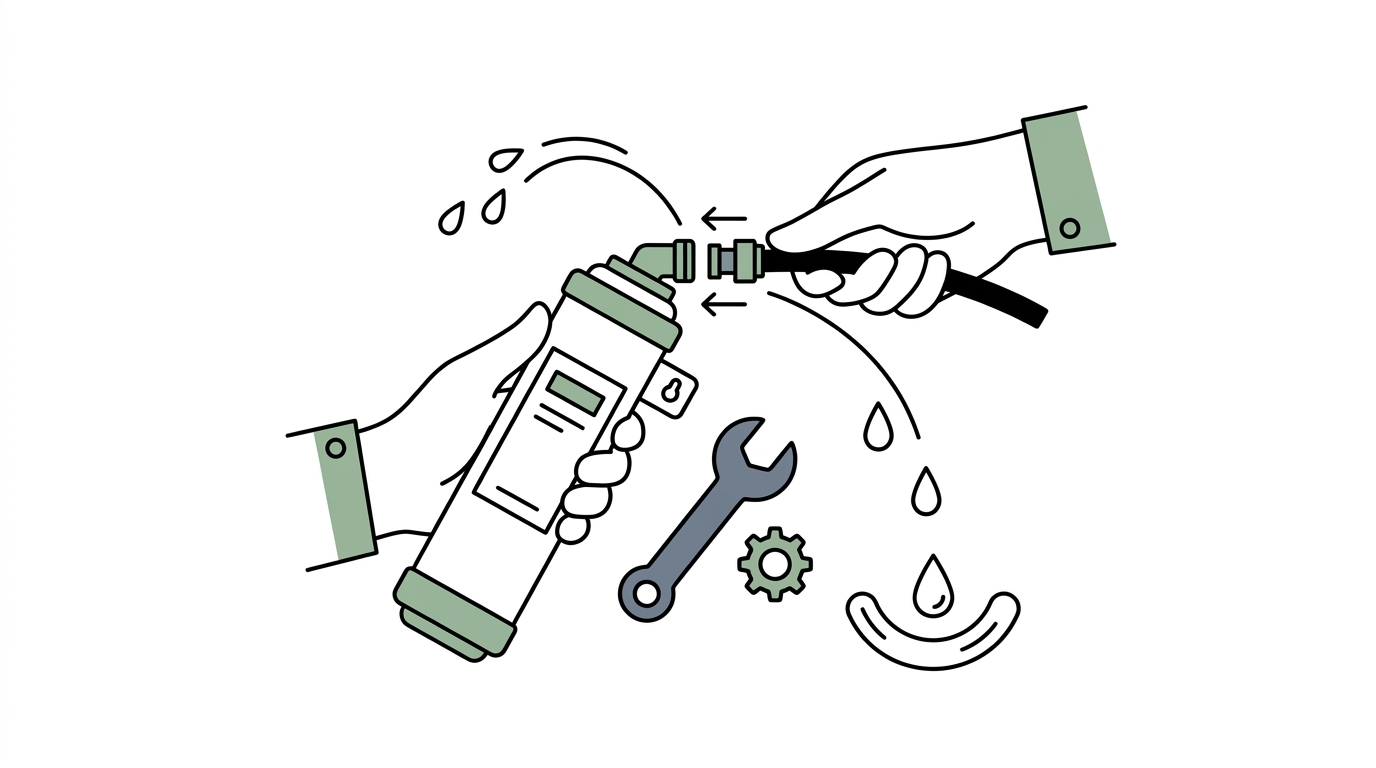
How 1/4" Quick-Connect Push-Fit Fittings Work
Modern water purifiers don't use complex metal nuts or wrenches. Everything connects with quick-connect push fittings. Understanding the two simple motions gives you complete freedom to replace any cartridge yourself.
No water coming out of the pure water tap
Water purifier runs continuously and won't stop draining
Water tastes bitter, metallic, or has an off smell
Slow dripping leak at a pipe elbow joint
Booster pump makes loud rattling or vibrating noise
Pure Water for Real Health: What You Drink Every Day Matters
Clean drinking water is the quiet foundation of your family's immunity, digestion, kidney health, and daily energy. But there are big misconceptions about what "pure" really means.
The Myth of 'Zero TDS' Dead Water
Some sales agents push TDS down to 10 or 20, claiming it is "ultra-pure". In truth, water with TDS below 50 is mineral-starved and acidic, which leaches essential calcium from your body. The World Health Organization (WHO) and Indian health standards recommend drinking water in the **80 to 150 ppm TDS range** with natural electrolytes.
What Real RO Membranes Actually Remove
Boiling water kills bacteria, but boiling does not remove dissolved lead from aged municipal pipes, industrial arsenic, chemical pesticides, or microscopic plastic fibers. A true Thin-Film Composite (TFC) membrane acts as an absolute physical barrier, rejecting dissolved heavy metals by 92% to 96%.
3 Simple Rules for Healthy Home Water
- Test your tap TDS with a ₹250 digital meter every 2 months
- Flush and wash your storage tank twice a year to prevent biofilm
- Never drink water that tastes flat or bitter; replace post-carbon immediately
How Do You Know If a Replacement Filter Is Actually Good?
You cannot judge filter quality by fancy brand stickers or weight alone. True filtration depends on physical density, genuine media formulation, and tight internal seals that stop water from slipping around the edges.
Graduated Fiber Density (Outer to Inner)
A good spun filter has loose fibers on the outside to catch big dirt, and tightly compacted micro-fibers inside to catch fine silt. Cheap duplicate filters are wound loosely throughout, letting abrasive mud punch straight through to the pump.
High Iodine Value Coconut Carbon (~1000 IV)
Iodine Value measures how many microscopic pores the carbon has to trap chlorine. Industrial coal carbon has a low value (400 to 600 IV) and leaches black dust. Genuine virgin coconut shell carbon achieves 1000+ IV, neutralizing chlorine on contact.
Bypass Prevention & End-Cap Sealing
Water always takes the path of least resistance. If a cartridge is slightly too short or lacks solid centering collars, pressurized water skips the filter completely and rushes around the gaps. Tight internal fitment is just as critical as the filter media itself.
Don't Replace by Calendar Alone: Check What Your Filter Looks Like
Fixed calendar months are only general guidelines. If your municipality cleans water pipelines or monsoon brings heavy silt, you might need to change your pre-filter in 2 months. Use this simple visual check.
Bright clean white candle. Zero silt loading. Water pressure drops across filter is near zero. Full flow rate.
Outer surface turns light tan. The depth fibers are actively doing their job trapping sand and silt. Central core is still clean.
Deep brown rust silt has penetrated into the middle layers. Flow rate through pre-filter noticeably drops.
Choked with thick black cake. Core saturated. Booster pump is groaning and running hot under strain.
Spun Pre-Filter
Replace external spun candle in the outer bowl. Takes 3 minutes and protects your entire machine.
Inline Sediment & Carbon
Replace both internal inline cartridges to guarantee zero chlorine damage to the RO membrane.
RO Membrane
Replace membrane only when purified water TDS rises above 90% of raw feed water TDS.
See How Much You Save Over 3 Years
Compare standard company AMC contracts with buying genuine factory-direct filter sets online and swapping them yourself in 15 minutes.
Estimated Maintenance Expenditure Comparison
Compare the estimated cumulative cost of maintaining your domestic RO system through DIY replacement parts versus Annual Maintenance Contracts (AMCs), subscription rentals, and 20L bottled water cans.
- Spun pre-filters ~every 3 months
- Inline sediment & carbon annually
- Membrane evaluated every 2–3 yrs
- No recurring service contract markup
- Convenient technician doorstep visits
- Fixed annual fee (~₹5,000–₹7,000/yr)
- Unused visits do not carry over
- Parts bundled under contract terms
- Zero initial purifier purchase price
- Continuous recurring monthly payments
- Machine is returned if contract ends
- Higher cumulative multi-year outlay
- No machine maintenance or plumbing
- Requires storage space & lifting
- Variable supply consistency & quality
- Substantial recurring expenditure
Frequently Asked Questions
Direct, transparent answers to the questions homeowners ask us most often.
Are ROPARTS filters compatible with Kent, Aquaguard, Pureit, and Livpure?
Yes, 100% universal fit. Over 95% of domestic purifiers in India use standard 10-inch inline cartridges with universal 1/4-inch push-fit connectors. If your purifier has push-fit pipes, these filters snap right into place.
What TDS reading should I expect from my purified water?
A healthy reverse osmosis system removes 90% to 95% of input salts. If your tap water is 500 TDS, your purified water should read between 40 and 60 TDS before mineral dosing, and 80 to 120 TDS with a mineralizer.
Can I replace the filters myself without any special tools?
Yes, easily. The push-fit connectors require zero tools: push the pipe in to seal, press the collar ring to release. The only tool you ever need is a standard plastic spanner to unscrew the external pre-filter bowl.
Why does my reject water pipe keep draining even when the tank is full?
This happens when the Auto-Shut-Off Valve (ASV) or Solenoid Valve (SV) gets stuck open with grit. Replacing this ₹120 to ₹150 valve stops the continuous wastewater drain immediately.
How do I know when my RO membrane is actually choked?
Never take a technician's word alone. Check the water pressure exiting the sediment and carbon filters first. If good pressure enters the membrane but almost no water exits into the tank while waste flows freely, test the output TDS. If TDS is high or pure flow is zero despite good pump pressure, then the membrane is scaled.
Genuine Certified RO Parts & Maintenance Kits
Order certified replacement cartridges directly from the manufacturer without middleman markups, duplicate risks, or inflated technician fees.