
Common RO Problems & Which Part to Replace
By ROParts Technical Team · Updated 26 Nov 2026 · 5 min read
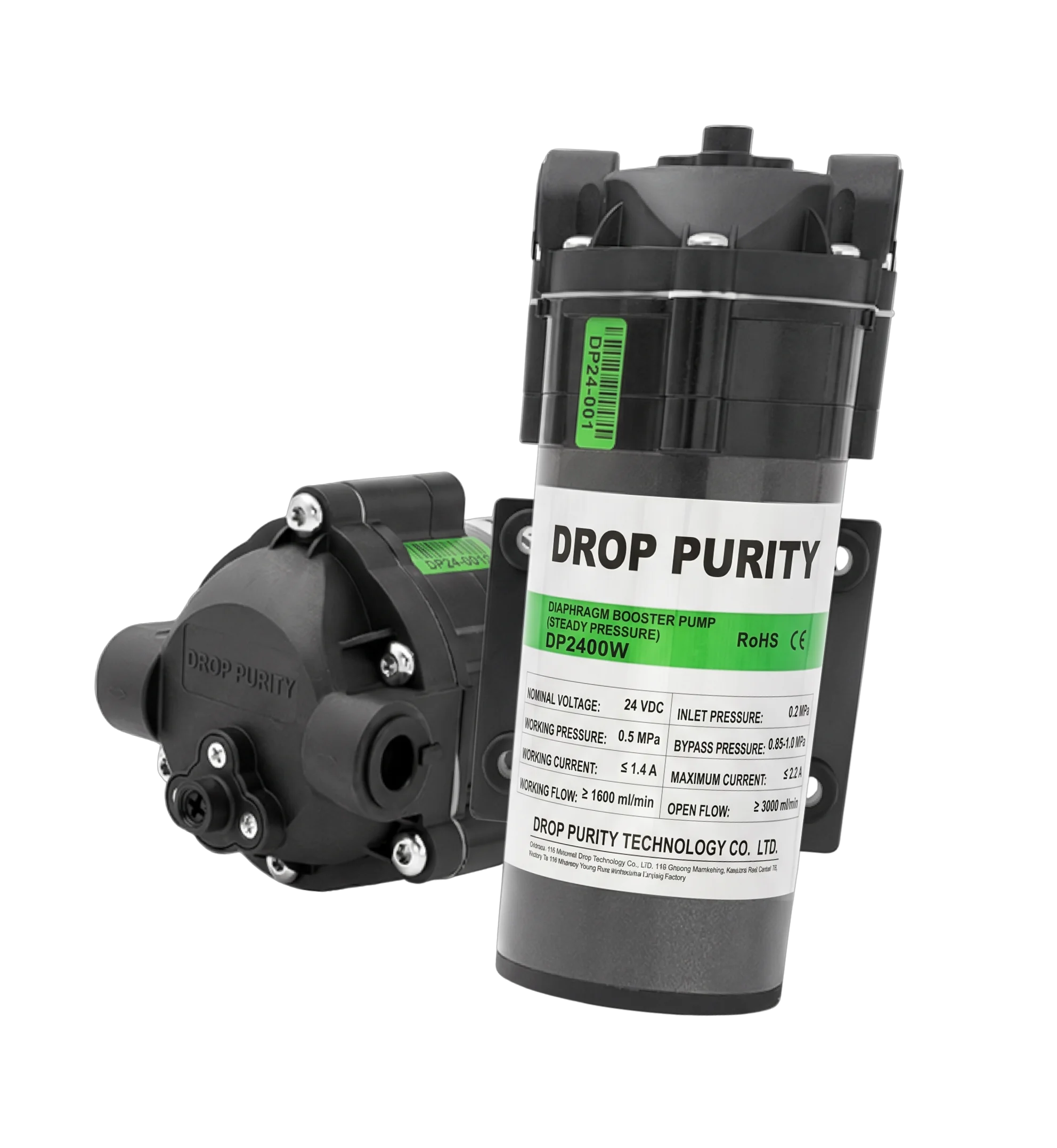
Instead of guessing which RO part failed, match your purifier's exact symptom to the likely faulty spare component using this step-by-step repair checklist.
1. Low or no pure water flow
Slow output is the most frequent complaint—and the most commonly misdiagnosed issue. Rather than jumping straight to an expensive membrane, inspect the external PP spun filter first; mud clogging starves the entire cabinet.
Next check the Flow Restrictor (FR) on the drain pipe and test water entering the membrane. Only when good pressure reaches the membrane with clear drain flow and output remains a trickle should you inspect membrane scaling or pump pressure.
2. Water keeps draining even when purifier is off
If waste water keeps trickling down the sink drain after the storage tank fills or when wall power is turned off, raw line pressure is bypassing an open valve. The 24V Solenoid Valve (SV) acts as the electrical intake shut-off valve.
Sediment grit or worn internal rubber diaphragms hold the SV slightly open. Swapping the faulty SV immediately stops wasted water and protects pre-filters from unnecessary wear.
3. Storage tank overflows continuously
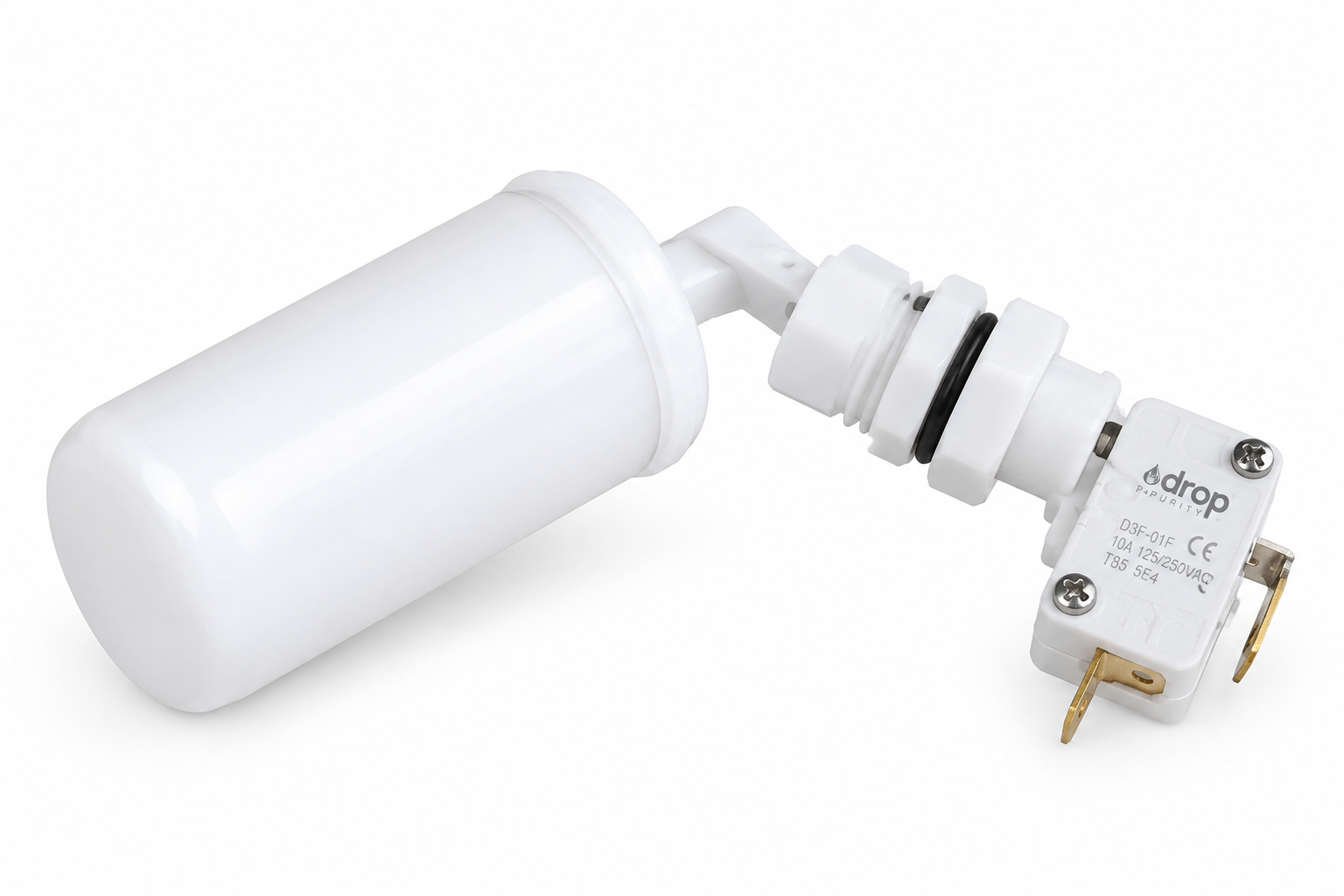
When clean water drips out of the purifier cabinet overflow slot, the machine failed to turn off once the tank became full. Inside the top tank cover sits the float switch whose rising float triggers an internal micro-switch.
Check first whether the float arm is jammed against tubing. If the float moves freely yet power refuses to shut off, replacing the float switch stops kitchen counter spills cleanly.
4. Booster pump not starting at all
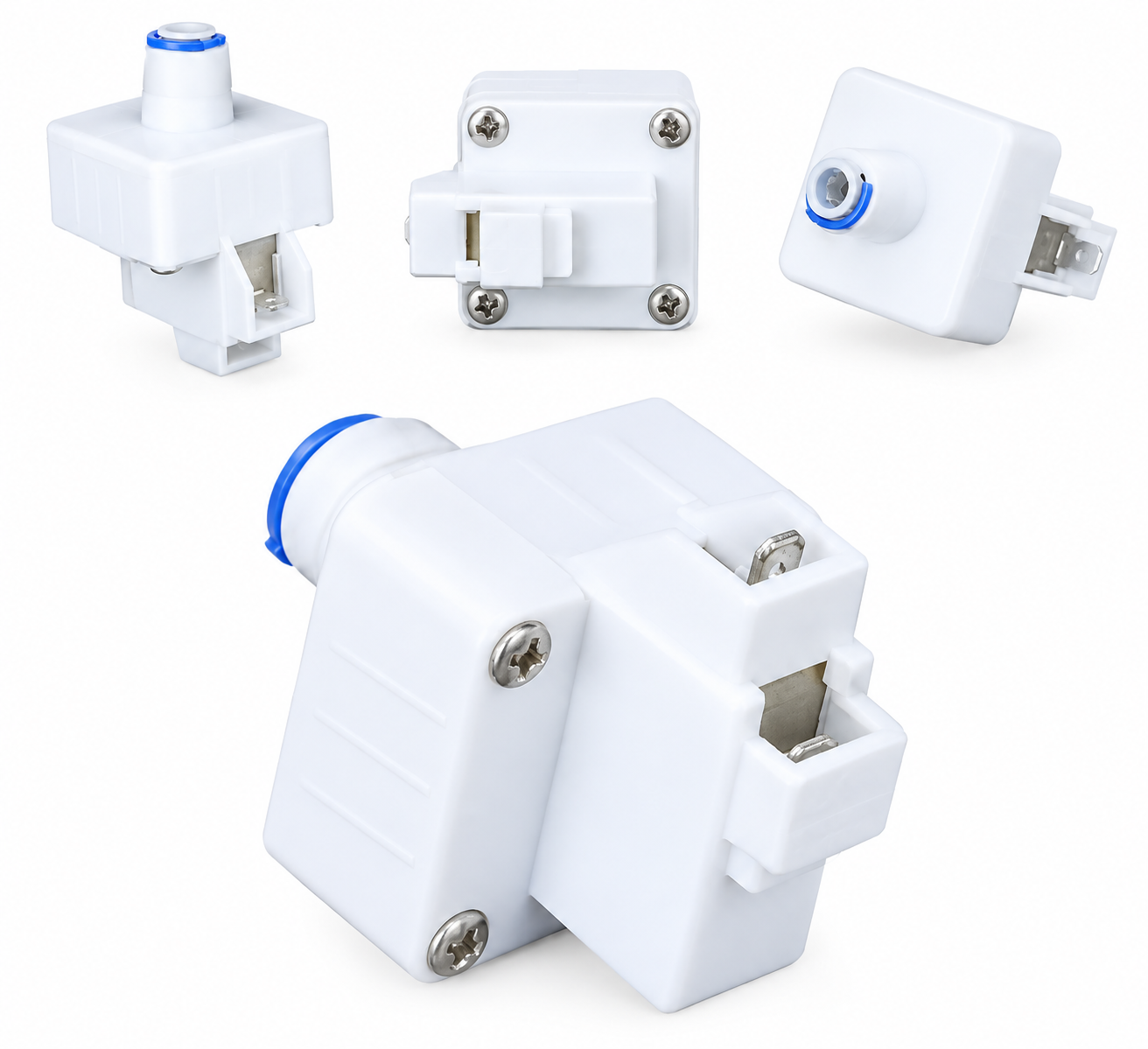
Zero motor sound with power switched on usually traces to one of three electrical parts: a dead wall socket, a blown 24V SMPS power adapter, or an open Low Pressure Switch (LPS) protecting the pump during low water supply.
Check first whether raw tap water is reaching the machine with normal pressure (LPS requires inlet water pressure to close). Next check SMPS 24V DC output before concluding that the booster pump motor itself failed.
5. Pure water tastes salty or TDS jumped high
If output TDS climbs close to raw tap TDS, check whether internal tubing at the membrane housing pure outlet slipped, whether the FR is blocked causing high salt passage, or whether the RO membrane O-rings bypassed or the TFC layer wore out.
Check also for an open TDS controller bypass valve (if your machine has a manual TDS adjuster knob) before installing a new membrane and FR.
6. Water dripping from joints or housings
Cabinet puddles come from either brittle tube ends inside push-fit elbows or flattened O-rings around pre-filter bowls. Trim damaged pipe cleanly at 90 degrees or fit fresh parts from an RO pipe & fittings pack.
For bowl leaks or stripped threads, inspect the filter housing. Run interactive checks anytime on our RO Troubleshoot tool or book a ₹49 technician inspection.
Shop parts from this guide


Frequently Asked Questions
Which RO spare part causes continuous waste water even with power off?
A jammed or worn 24V Solenoid Valve (SV) fails to seal raw water when power turns off, causing constant drain leakage.
Why does my RO machine shut off and never start despite power on?
If overhead water supply pressure is too low, the Low Pressure Switch (LPS) opens safely to protect the booster pump. Alternatively, test the 24V SMPS and float micro-switch.
Can a loose O-ring on the RO membrane stem raise water TDS?
Yes. If stem O-rings tear or sit unseated, raw high-TDS feed bypasses into the clean water outlet.