
How to Choose the Right RO Membrane
By ROParts Technical Team · Updated 26 Nov 2026 · 5 min read
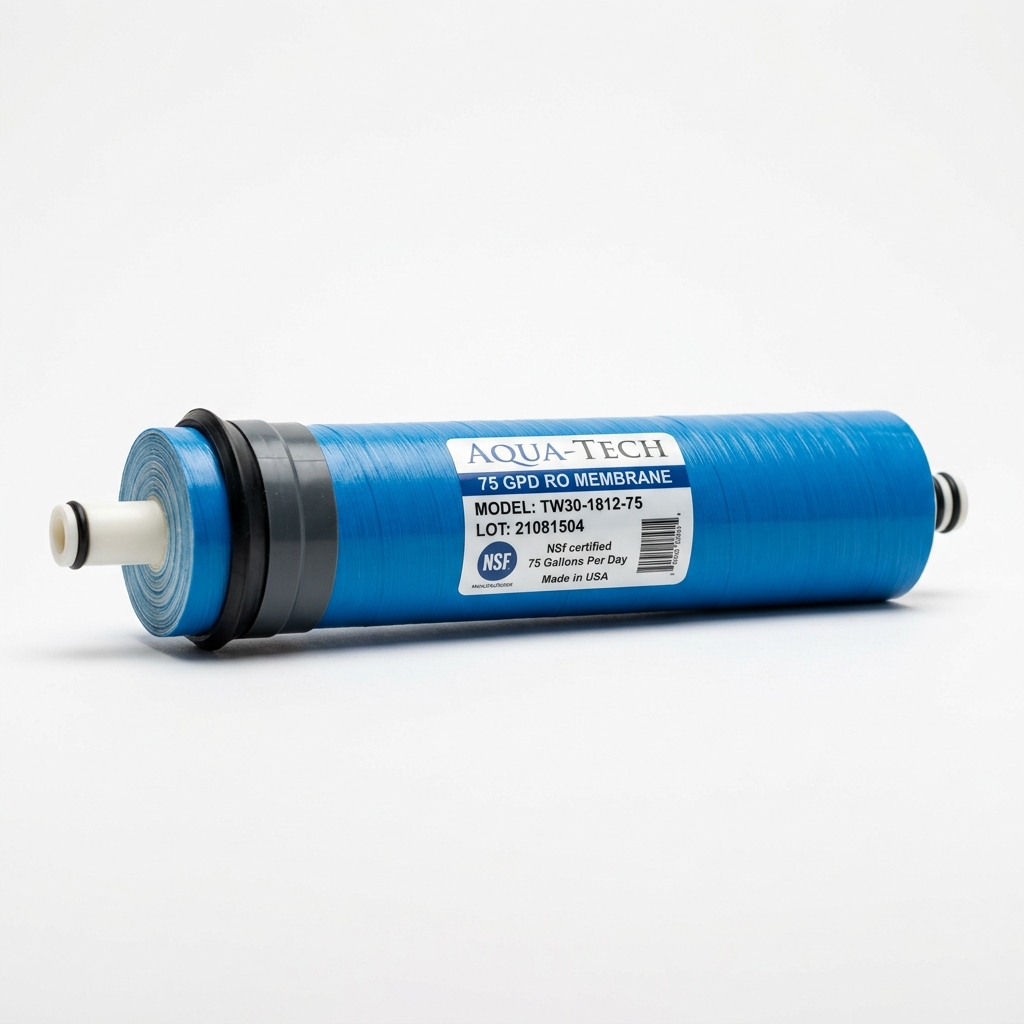
Before replacing your RO membrane, learn what GPD ratings actually mean, how 1812 dimensions fit standard housings, and how to confirm the old membrane is truly spent.
What an RO membrane does
The RO membrane is the primary dissolved-solids barrier in your water purifier. Unlike spun or carbon filters that trap visible sediment and chlorine, spiral-wound Thin-Film Composite (TFC) sheets separate dissolved salts, hardness ions, and heavy metals at the molecular level.
Because membrane sheets are the highest-value consumable inside a purifier, taking five minutes to check pressure, pre-filters, and TDS ensures you replace it only when genuinely required—and choose an RO part matched to your machine.
Understanding GPD ratings (75 / 80 / 100 GPD)
Membranes are labeled in GPD (Gallons Per Day), most commonly 75 GPD, 80 GPD, or 100 GPD in Indian homes. A higher GPD rating means faster pure water output per hour when fed steady pressure, making 80 or 100 GPD helpful for larger families or higher TDS sources.
However, higher GPD only delivers faster flow if your 24V booster pump supplies adequate operating pressure and your flow restrictor matches the membrane's reject ratio. Oversizing a membrane without pump pressure simply reduces output.
Matching membrane to input TDS and 1812 housing
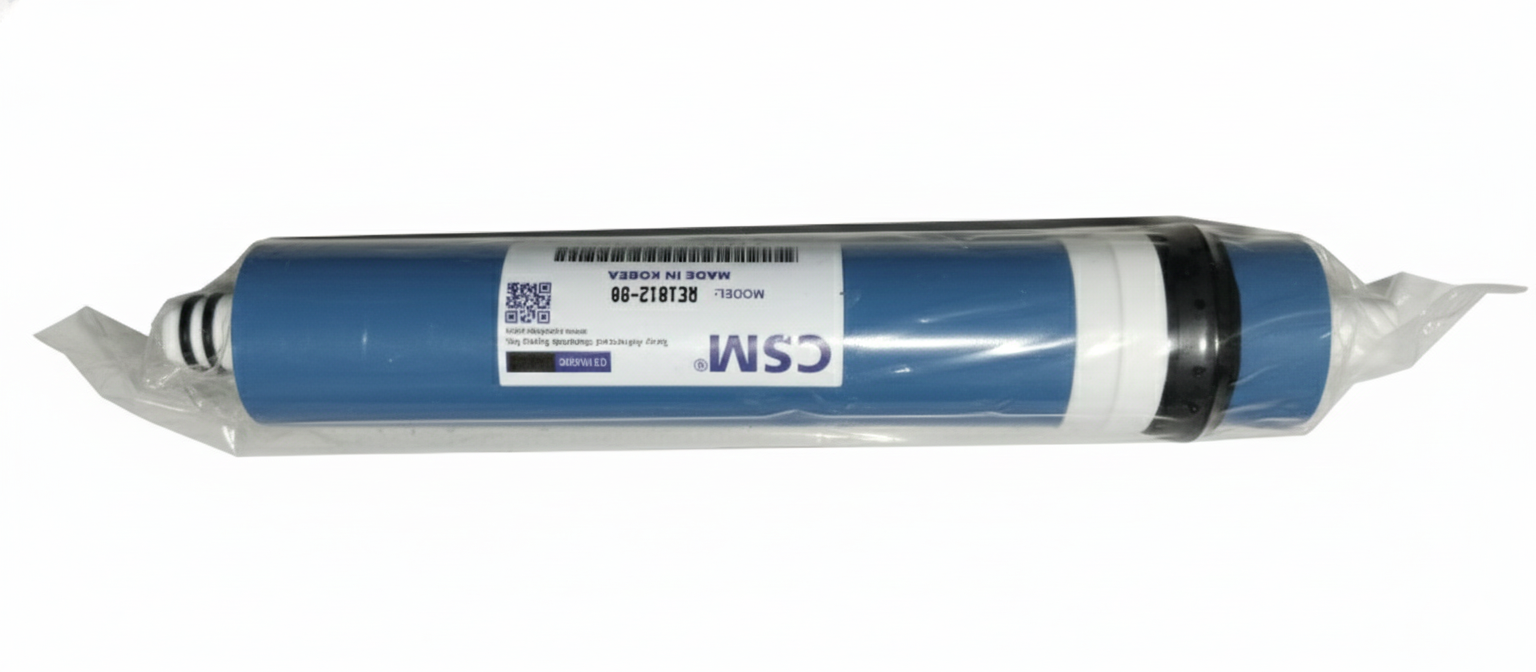
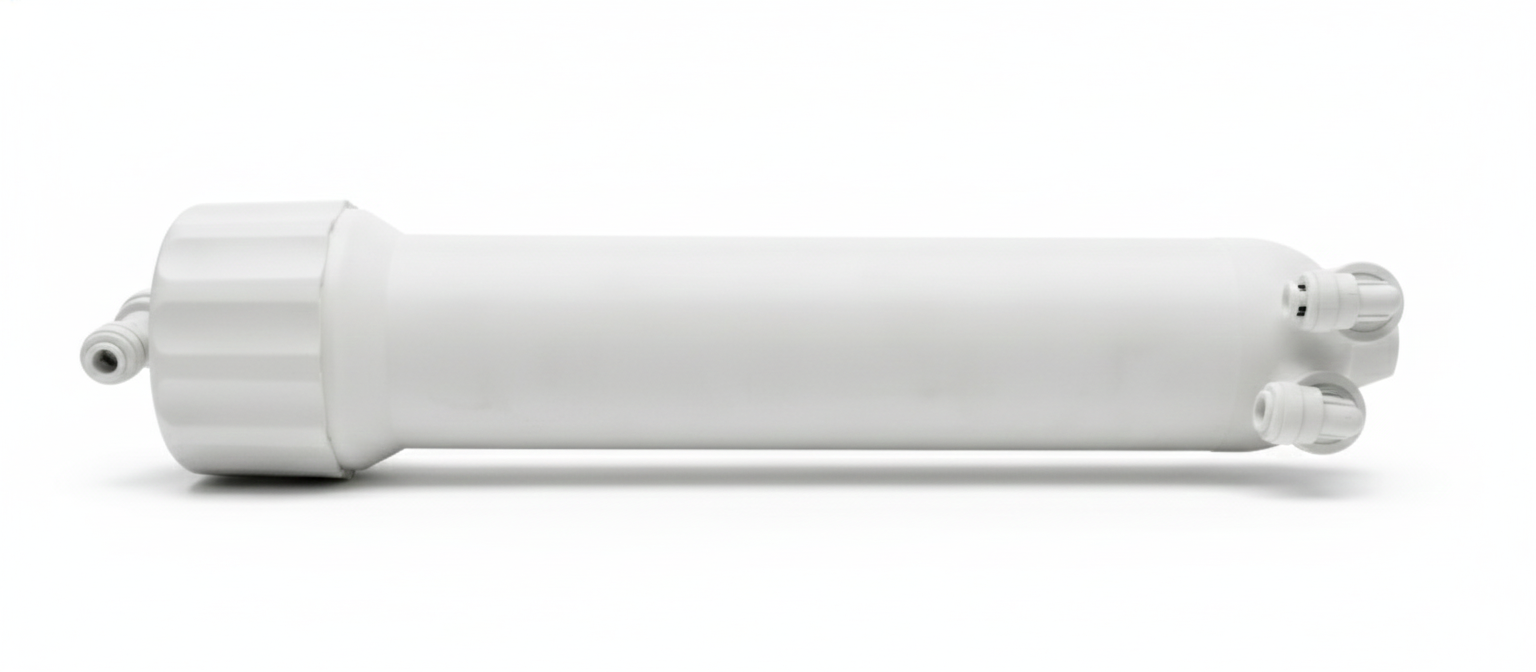
Physical sizing comes first: standard domestic RO membranes follow the 1812 form factor, fitting standard 1812 RO membrane housings. Measure your existing element before ordering if you own a non-standard compact cabinet model with proprietary twist-lock cartridges.
Next, compare input feed water TDS against output TDS using a calibrated meter. High-TDS borewell water puts heavier osmotic load on the membrane, requiring steady pump pressure and timely anti-scalant pre-treatment to prevent mineral scaling.
Why change the Flow Restrictor (FR) with a new membrane
Whenever installing a fresh membrane, technicians always replace the Flow Restrictor (FR) on the waste pipe at the same time. Over 1 to 2 years of service, calcium and silt gradually narrow or choke the tiny capillary inside an old FR.
Leaving a choked FR downstream of a brand-new RO membrane starves the reject wash stream, forcing mineral scale to precipitate rapidly across fresh TFC sheets. Swapping a low-cost FR protects the new membrane from day one.
Installation and first flush steps
Power off the machine and shut the inlet valve before opening the membrane vessel with a housing spanner. Rinse inside the membrane housing cleanly, lightly wet the new membrane's dual O-rings with clean water, and push the stem firmly until it seats flush inside the bottom socket.
Reconnect the quick-fit caps, install the fresh FR arrow pointing toward the drain, and flush the first tankful (at least 10 liters) to waste before drinking—this washes away factory preservative solution cleanly. See our visual checklist in the RO Membrane spec guide.
- Always wear clean hands or gloves when handling the unwrapped TFC membrane.
- Confirm the two small black O-rings sit snugly on the pure water stem before pushing in.
- Discard the first 10 liters of pure output before tasting or testing TDS.
Signs your membrane really needs replacement
Slow pure water alone does not automatically prove a dead membrane. In many homes, a clogged PP spun pre-filter or blocked FR starves the membrane of pressure. Test raw water pressure exiting the carbon filter first and inspect the reject flow.
Typically, a genuine domestic RO membrane lasts roughly 2 to 3 years, or sooner when feed TDS is very high or pre-filters are skipped. True signs of membrane failure include high pure-water TDS even with strong pump pressure and clear pre-filters, or irreversible internal scaling blocking flow. Need help diagnosing? Run our RO Troubleshoot check.
Shop parts from this guide


Frequently Asked Questions
Is a 100 GPD membrane always better than 75 or 80 GPD?
Only when paired with healthy booster pump pressure and matching flow restrictor sizing. A higher GPD membrane fills the tank faster if your pump can support it.
How long does an RO membrane typically last in India?
About 2 to 3 years under average municipal or moderate TDS water, and sooner with high-TDS borewell water or skipped pre-filter replacements.
Should I check anything else before replacing an RO membrane?
Yes—check the external spun filter, flow restrictor, and 24V booster pump pressure first, as any of these can mimic a slow membrane.