
When Should RO Filters Be Replaced?
By ROParts Technical Team · Updated 26 Nov 2026 · 5 min read
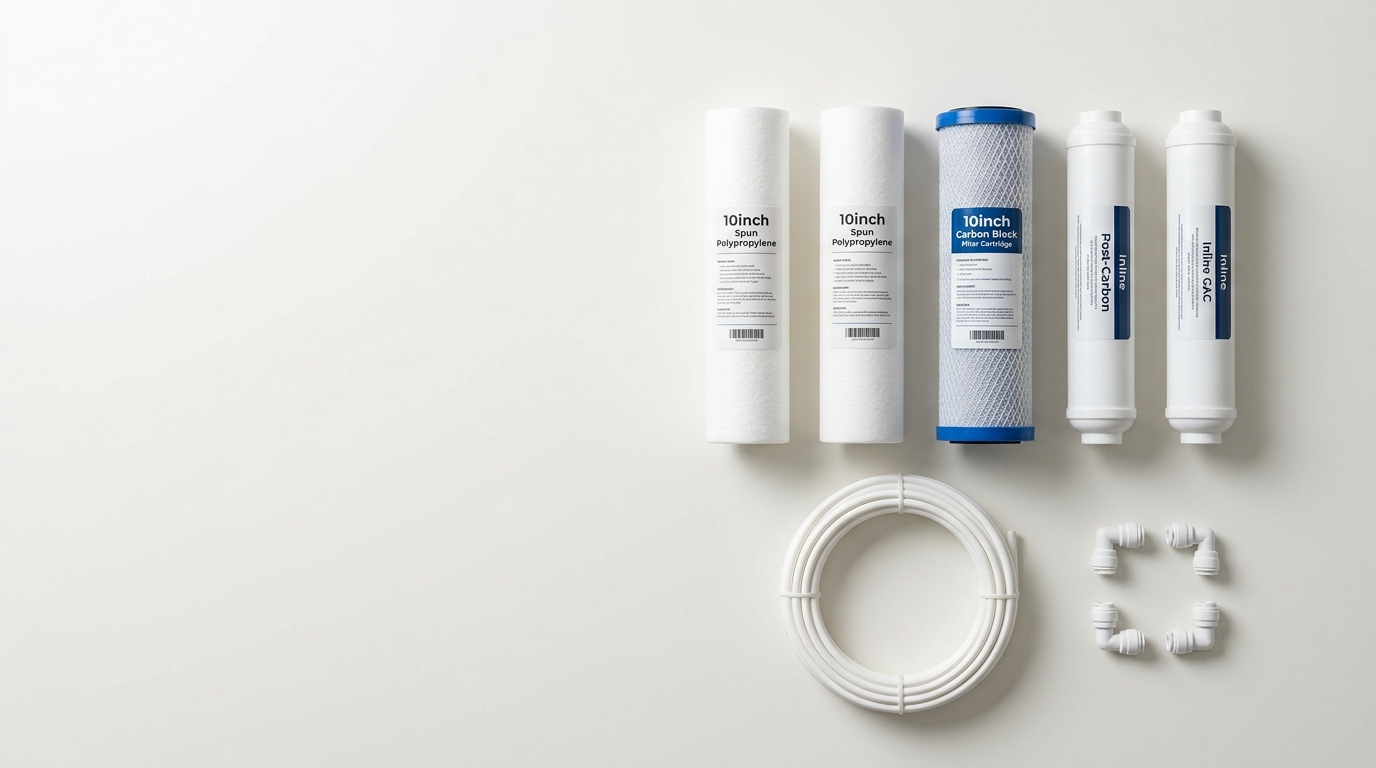
Waiting until water stops completely costs more in damaged pumps and membranes. Here is a practical replacement calendar and the warning signs that a filter is overdue.
Typical replacement schedule by stage
Different stages inside an RO purifier wear out at different rates because each layer intercepts a different type of impurity. Treating every cartridge on one fixed timer either wastes healthy filters too early or lets clogged pre-filters choke the membrane.
Following a staggered schedule keeps water tasting crisp and protects pressurized components like the booster pump from straining against blocked cartridges.
- PP Spun Pre-Filter (external bowl): Every 3 to 6 months.
- Inline Sediment & Pre-Carbon Filters: Every 6 to 12 months.
- Post-Carbon Taste Filter & Anti-Scalant: Every 12 months.
- 1812 RO Membrane & Flow Restrictor (FR): Every 2 to 3 years (verified by TDS check).
Warning signs that filters are overdue
Do not rely on dates alone—your purifier signals filter exhaustion well before total blockage. Noticeably slow tank filling, loud pump vibration from cavitation, cloudy ice cubes, or returning chlorine/musty taste all indicate overdue pre-filters or exhausted carbon.
Another reliable indicator is an upward creep in output TDS measured with a handheld TDS meter. While rising TDS often points toward the membrane or a faulty Flow Restrictor, overdue filters upstream accelerate membrane fouling.
How feed water quality changes the schedule
Municipal piped supply with moderate TDS puts lighter sediment stress on the PP spun filter, often letting pre-filters reach the upper end of their 6-to-12-month window—though chlorine levels still demand timely carbon changes.
By contrast, borewell water, tanker supply, or high-hardness sources shorten spun filter life toward 3 months and demand an antiscalant cartridge to protect the membrane from heavy calcium scale.
Annual service kit vs individual RO filter parts
For quick 3-to-6-month maintenance between annual overhauls, keeping a multi-pack spun filter combo at home lets you swap dirty bowls in ten minutes without calling anyone.
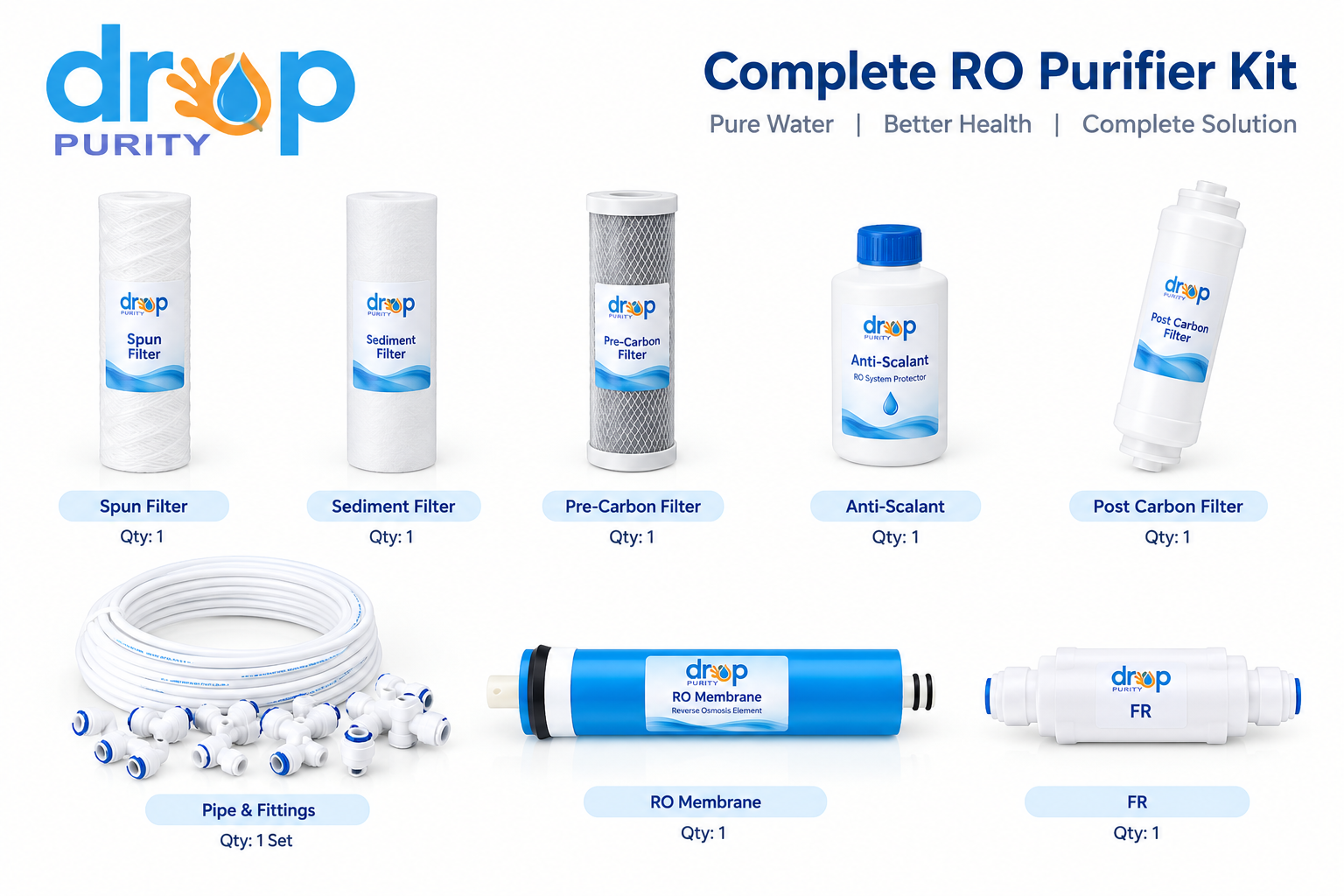
Once a year when sediment, pre-carbon, and post-carbon are all due together, an annual 7-stage standard service kit ensures matching cartridges arrive together. If your membrane and FR are also due after 2+ years, step up to an advance overhaul kit.
Simple DIY filter replacement steps
Always unplug the power cord and close the raw inlet tap before opening any housing or detaching a push-fit elbow. Note flow arrows on inline cartridges carefully so directional media installs correctly.
Flush new carbon stages into a bucket before reconnecting the membrane feed tube, check every 1/4-inch joint in our pipe and fittings kit for snug insertion, then open water supply and inspect for drips.
When to call a technician
If your machine shows electrical symptoms—pump fails to start, 24V SMPS runs hot, solenoid valve bypasses drain water while off, or cabinet wiring needs inspection—booking an expert saves time and guarantees safe diagnostics.
You can book doorstep RO service at ₹49 directly through ROParts.in, and any genuine RO part needed is billed transparently from our factory-direct catalog without hidden markups.
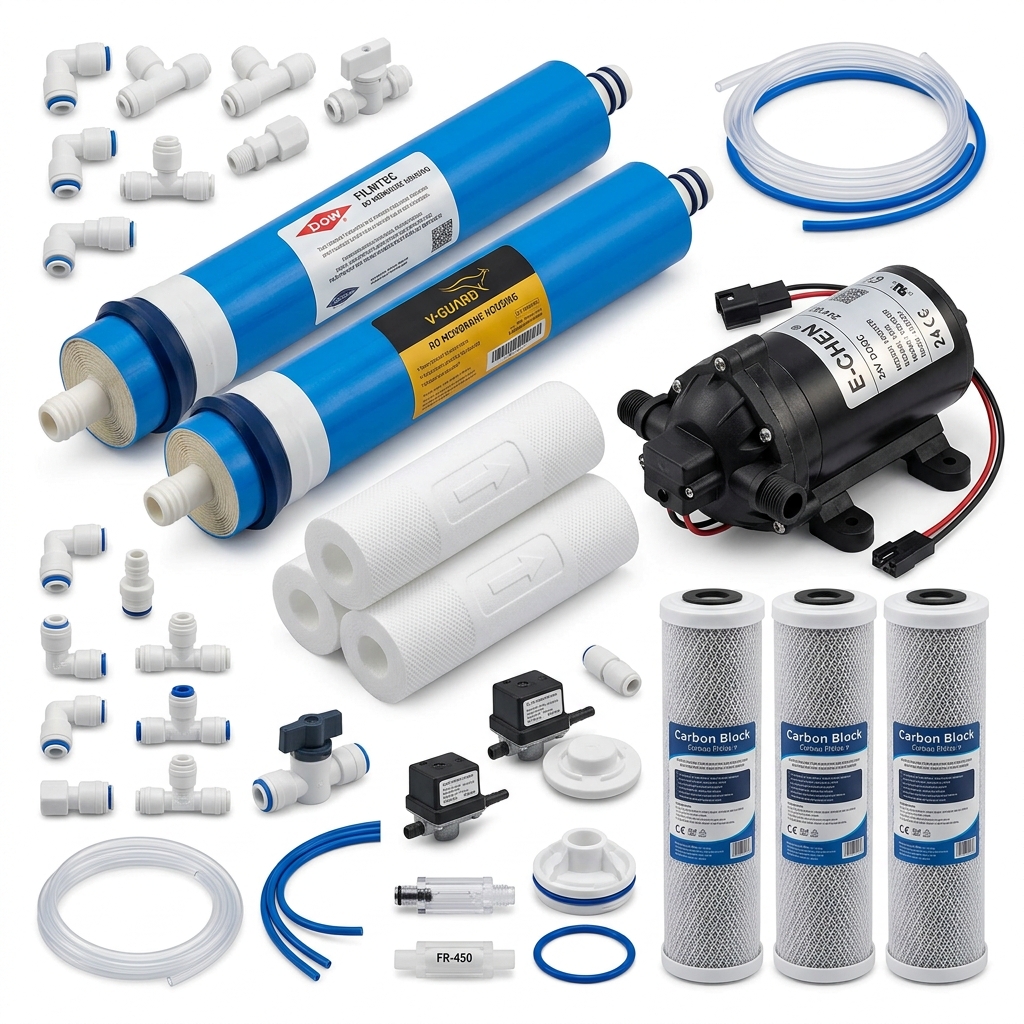
Shop parts from this guide

Frequently Asked Questions
Does a slow RO water stream mean the RO membrane is damaged?
Often no—a clogged external PP spun filter or choked flow restrictor slows water output first. Check pre-filters before replacing the membrane.
How often should an external PP spun filter be replaced in borewell water?
Usually every 3 to 6 months, or whenever the white spun candle turns dark brown/rust-coated and slows inlet pressure.
What is included in a standard annual filter service?
Typically the PP spun pre-filter, inline sediment filter, pre-carbon and post-carbon filters, plus fresh sealing tape or push-fit connectors.