
Sediment vs Carbon Filter: Key Differences
By ROParts Technical Team · Updated 26 Nov 2026 · 5 min read
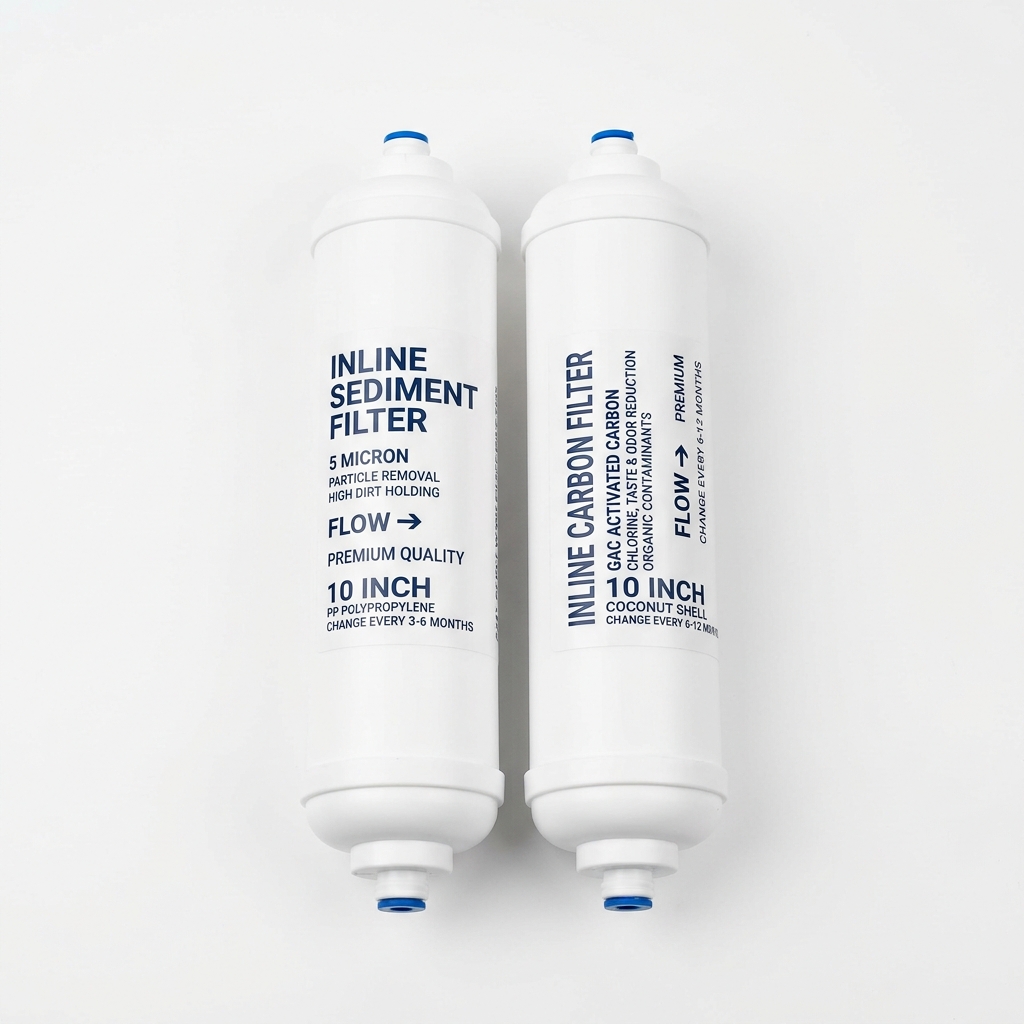
Both sit side by side inside most RO cabinets, yet sediment and carbon cartridges remove completely different impurities. Here is why your purifier needs both in the exact right order.
What a sediment filter removes
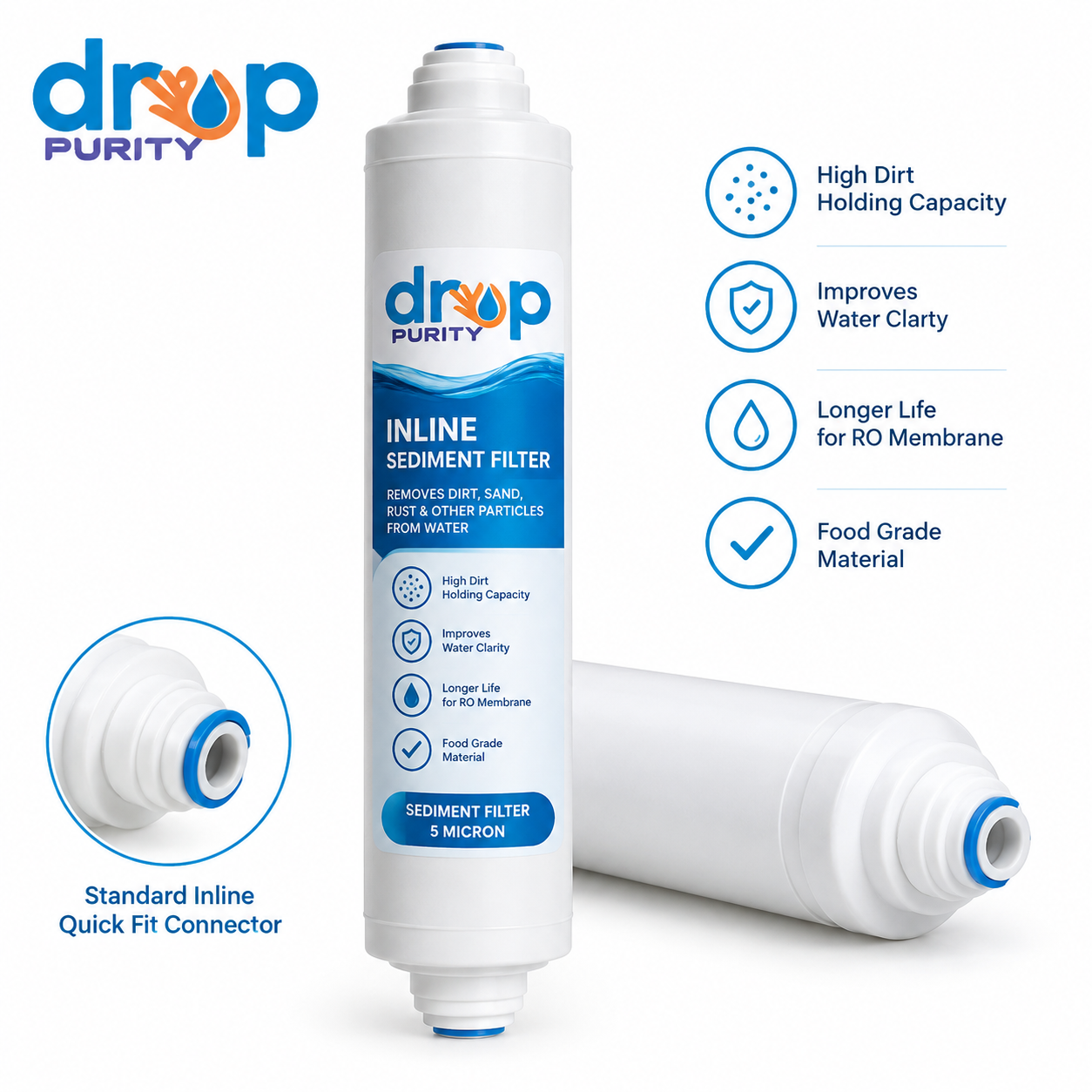
A sediment cartridge is a purely mechanical particle trap. Water passes through dense spun or pleated polypropylene fibers that physically strain out dirt, rust flakes from galvanized pipes, clay silt, and suspended grit.
Between the external PP spun filter and the internal inline sediment filter, almost all particulate turbidity is cleared early. Sediment media does not adsorb dissolved chlorine or chemical tastes—its sole focus is keeping particles out of downstream carbon pores and pump valves.
What an activated carbon filter removes
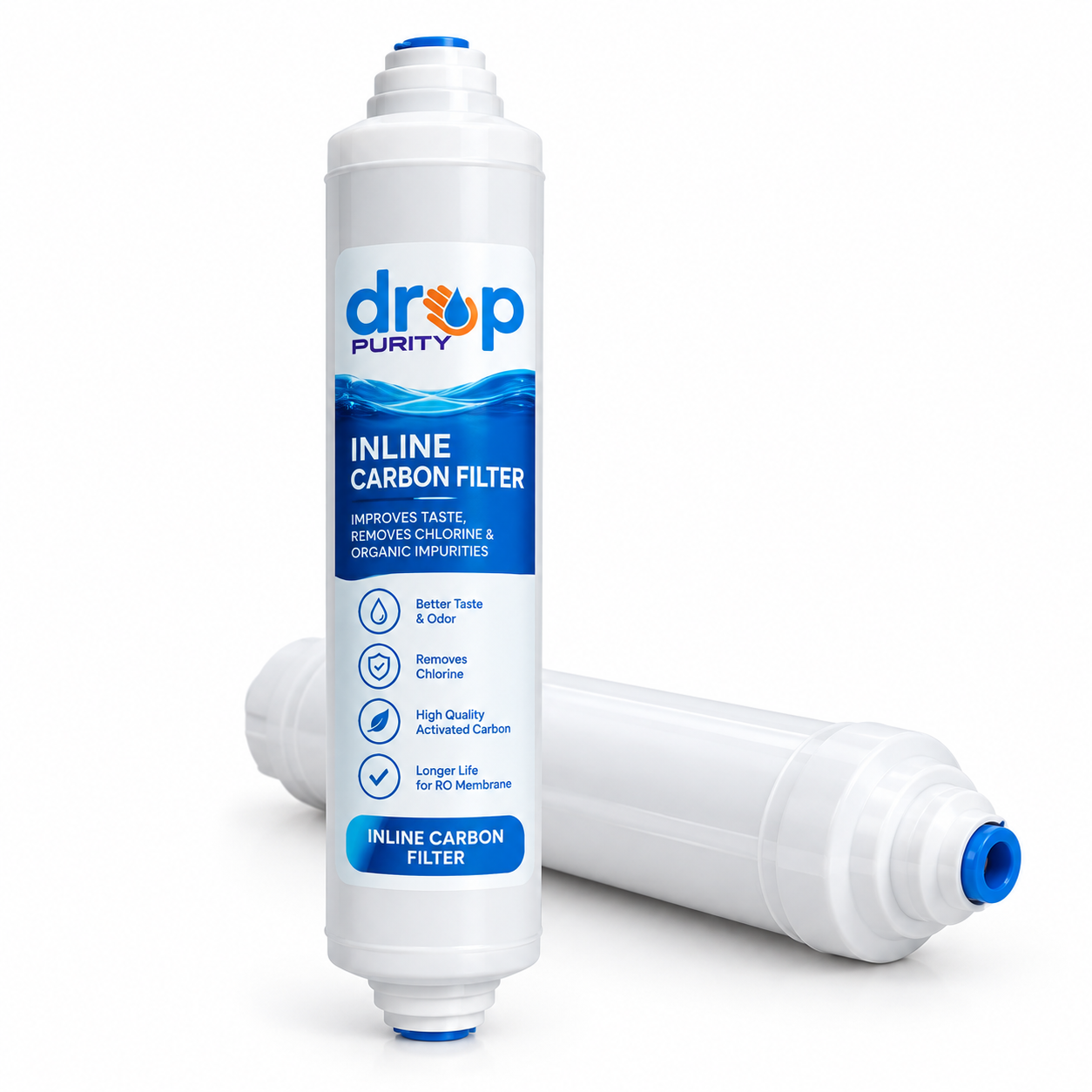
An inline carbon filter works through chemical adsorption rather than simple particle sieving. Activated carbon granules or blocks contain millions of microscopic pores that bond onto free chlorine, chloramines, dissolved organic compounds, pesticides, and unpleasant odors.
In municipal water supplies treated with chlorine, the pre-carbon stage performs a critical safety job: polyamide RO membrane sheets degrade quickly when exposed to free chlorine. Good carbon adsorption preserves membrane rejection performance over time.
Pre-carbon vs post-carbon
Many domestic purifiers use carbon in two locations. Pre-carbon sits upstream of the booster pump and RO membrane specifically to neutralize chlorine and organic odors from incoming raw water.
Post-carbon sits at the final stage between the membrane or storage tank and the drinking tap. By polishing the purified water just before dispensing, post-carbon gives drinking water a crisp, neutral finish without altering safe mineral levels.
Why stage order matters (sediment before carbon before membrane)
Installing cartridges in reverse order causes rapid failure. If raw silt hits the carbon cartridge before passing through a sediment filter, mud coats the carbon granules and plugs microscopic adsorption pores within weeks—leaving chlorine free to pass straight through.
Placing sediment first keeps carbon pores open for chemical adsorption, and placing carbon before the RO membrane keeps chlorine away from delicate TFC sheets. Follow the directional arrow molded onto every inline housing body during DIY installation.
Replacement intervals for both filters
External PP spun candles carry the heaviest dirt load and typically need changing every 3 to 6 months, or even sooner during monsoon turbidity spikes. Internal inline sediment and inline carbon cartridges typically run smoothly for 6 to 12 months before media exhausts.
Whenever you install a fresh carbon filter, flush 2 to 3 liters of water through it (detached from the membrane) until black carbon fines clear—this avoids pushing loose dust into pump check valves or the membrane.
- PP Spun Pre-Filter: Every 3–6 months (or whenever visibly dark mud coats the outside).
- Inline Sediment & Pre-Carbon: Every 6–12 months.
- Complete Annual Combo: Best handled together via a pre-packed service kit.
Choosing inline cartridges vs spun bowl cartridges
An external spun candle fits inside a reusable clear or opaque filter housing mounted outside the cabinet, making dirt inspection and 3-month swaps inexpensive and quick. Inline cartridges integrate both media and sealed casing into one push-fit cylinder inside the cabinet.
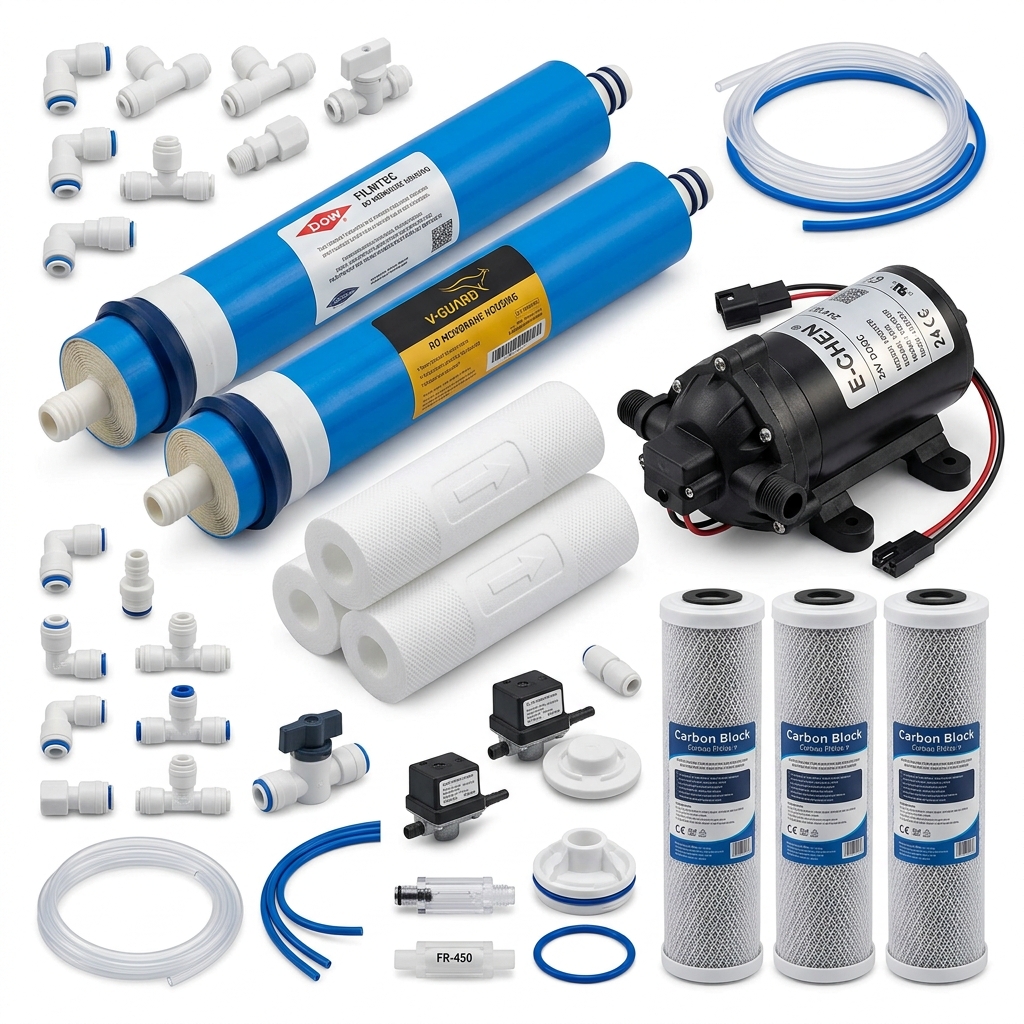
Keeping the external spun healthy multiplies the life of your internal inline sediment and inline carbon filters. When annual service comes due, grab an all-in-one 7-stage standard kit or individual RO filters.
Shop parts from this guide

Frequently Asked Questions
Can a carbon filter replace a sediment filter?
No. Without a sediment filter ahead of it, mud and silt quickly coat activated carbon pores and block both water flow and chlorine removal.
Why does black water come out when fitting a brand-new carbon filter?
Those are harmless fine carbon particles from shipping vibration. Flush the new carbon filter to a bucket for 1–2 minutes before reconnecting downstream tubes.
How often should inline sediment and carbon filters be changed?
Under typical domestic usage, replace both inline sediment and inline carbon cartridges every 6 to 12 months.