
What Are RO Spare Parts? A Beginner's Guide
By ROParts Technical Team · Updated 26 Nov 2026 · 5 min read
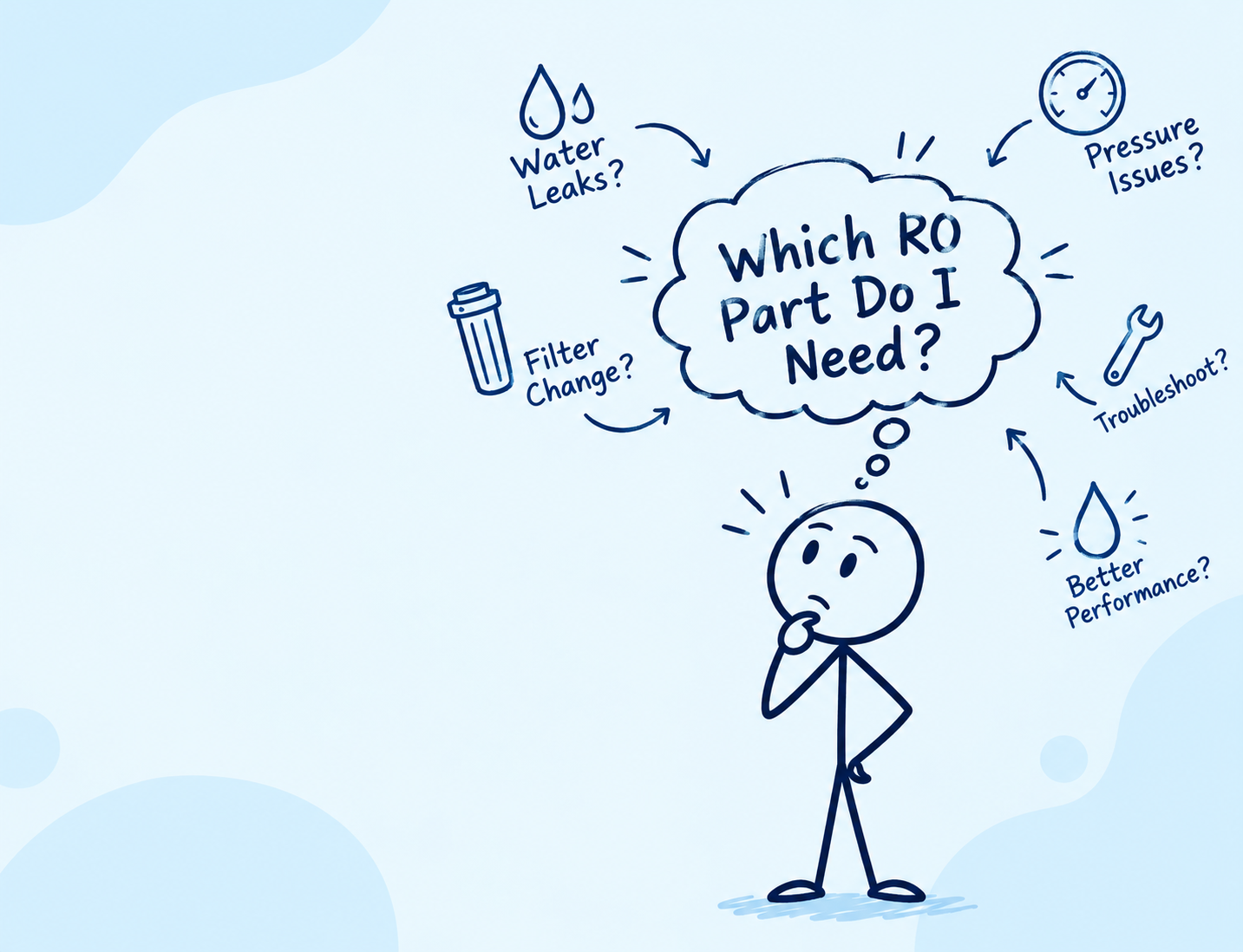
A clear breakdown of every filtration, electrical, and plumbing component inside a domestic RO water purifier, and how to tell when a single RO part needs changing.
What counts as an RO spare part?
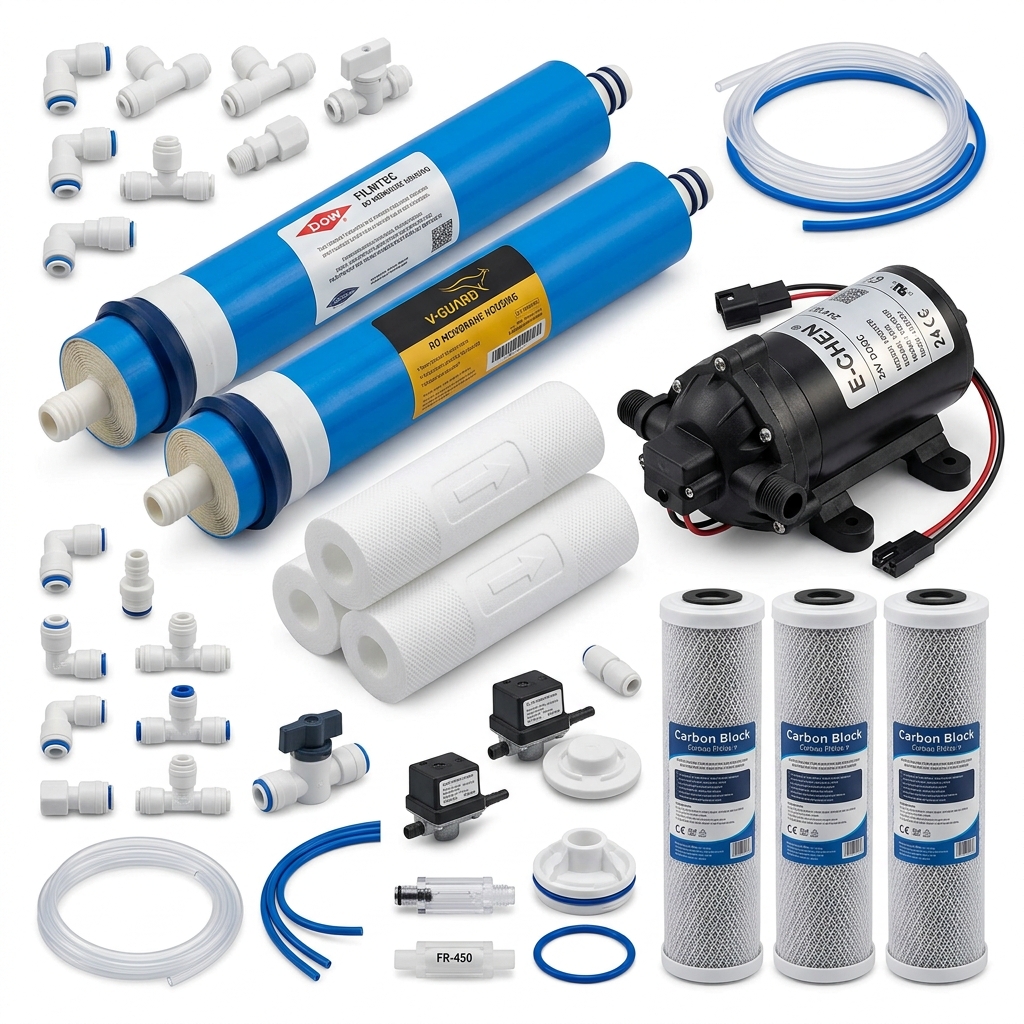
A reverse osmosis purifier is not a single sealed unit. Inside the cabinet sits a coordinated chain of replaceable filtration cartridges, pressure hardware, electrical switches, and push-fit plumbing. Each individual component is an RO spare part engineered for a specific job and service life, so you do not have to discard a whole purifier when water flow drops or taste shifts.
Understanding which RO part sits where saves both money and guesswork. Most domestic systems share standardized interfaces—10-inch pre-filter bowls, 1812 membrane housings, 1/4-inch tubing, and 24V DC power rails—making individual part replacement practical at home or through a local technician.
The filtration parts (spun, sediment, carbon, membrane)
Filtration happens in stages so coarse dirt never chokes the delicate membrane sheet. Water enters through a polypropylene spun pre-filter inside an external bowl, which captures visible mud, rust, and sand before water even reaches the internal cabinet.
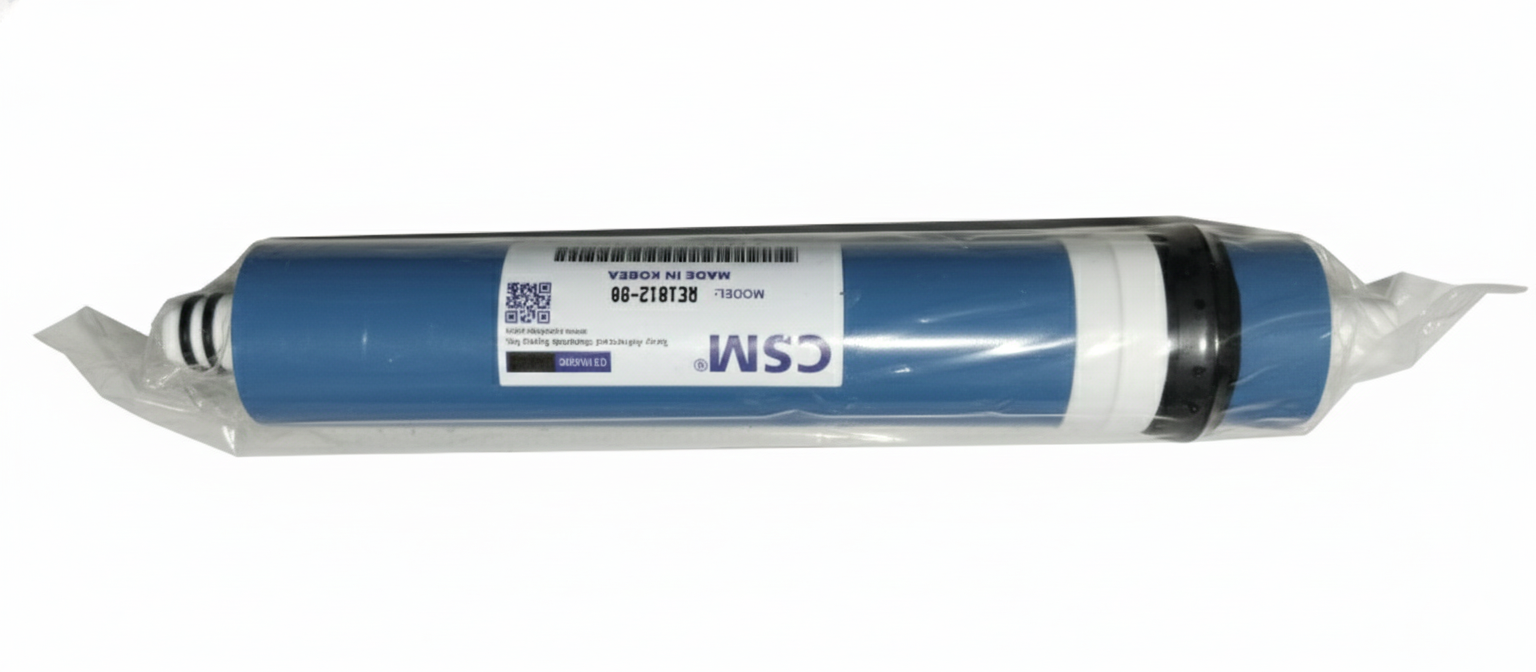
Inside the cabinet, an inline sediment filter catches finer suspended particles while an activated inline carbon filter removes chlorine and chemical odor. Water is then driven through the RO membrane (commonly an 1812 element) to reduce dissolved salts, followed by post-carbon taste polishing. In hard borewell areas, an antiscalant cartridge helps reduce mineral scale buildup.
- PP Spun Filter: Physical mud and silt barrier; typically changed every 3 to 6 months.
- Inline Sediment & Carbon Filters: Fine particle and chlorine shield; typically changed every 6 to 12 months.
- 1812 RO Membrane: Molecular TDS barrier; typically lasts 2 to 3 years depending on input water TDS and timely pre-filter changes.
The pressure and electrical parts (pump, SMPS, SV, LPS)
Reverse osmosis cannot happen on tap gravity alone when input TDS is moderate or high. A 24V DC booster pump generates the hydraulic push required to force clean H2O across the membrane, while the 24V SMPS power adapter steps down household AC mains to steady DC power.
Protecting that pump are automated switches and valves. The Low Pressure Switch (LPS) shuts off the pump when overhead tank water runs out so the diaphragm never runs dry. Meanwhile, a 24V Solenoid Valve (SV) acts like an electric tap, shutting off raw intake whenever power turns off.
Plumbing and control parts (FR, float, pipes, tap)
Behind every clean glass of drinking water are small, inexpensive control parts that maintain pressure and cleanliness. On the reject outlet sits the Flow Restrictor (FR), which maintains back-pressure inside the membrane housing while letting waste minerals flush out smoothly.
Inside the storage tank, a float switch cuts power automatically when the tank fills. Flexible 1/4-inch food-grade LLDPE RO pipe and push-fit connectors link every stage watertight, ending at the front purifier dispenser tap.
Single RO part vs complete kit
Buying all RO ke parts together only makes sense during scheduled annual maintenance. If your machine suddenly leaks from a cracked bowl or overflows because the float switch stuck, ordering a single verified RO part avoids paying for filters that still have months of life left.
Conversely, during annual service when both sediment and carbon cartridges are overdue together, choosing a pre-matched 7-stage standard kit or full advance kit simplifies fitment with fresh tubing and fittings in one box. You can also explore specs on our RO Parts India overview.
Where to buy genuine RO parts online
Unlabelled local spares often look identical on the outside while cutting corners inside—thin spun media, unwashed carbon dust, or leaky collet rings. Ordering direct from our RO spare parts catalog gives you transparent technical specs, compatibility notes, GST invoicing, and pan-India courier delivery backed by documented shipping and return terms.
If you are unsure which RO part matches an older purifier model, use our diagnostic RO Troubleshoot guide or reach ROParts support before placing an order.
Shop parts from this guide


Frequently Asked Questions
Can I replace a single faulty RO part instead of buying a full service kit?
Yes. Electrical valves, SMPS adapters, flow restrictors, float switches, and individual filter cartridges can each be purchased and replaced individually whenever needed.
What sizes are standard across most domestic RO purifiers in India?
Most domestic units use 10-inch spun pre-filter bowls, 1812 RO membrane housings, 1/4-inch push-fit LLDPE tubing, and 24V DC electrical components.
Which RO spare part gets replaced most often?
The external PP spun pre-filter is replaced most frequently—typically every 3 to 6 months—because it catches mud, rust, and silt first.