
RO Water Purifier Parts & Their Functions
By ROParts Technical Team · Updated 26 Nov 2026 · 5 min read
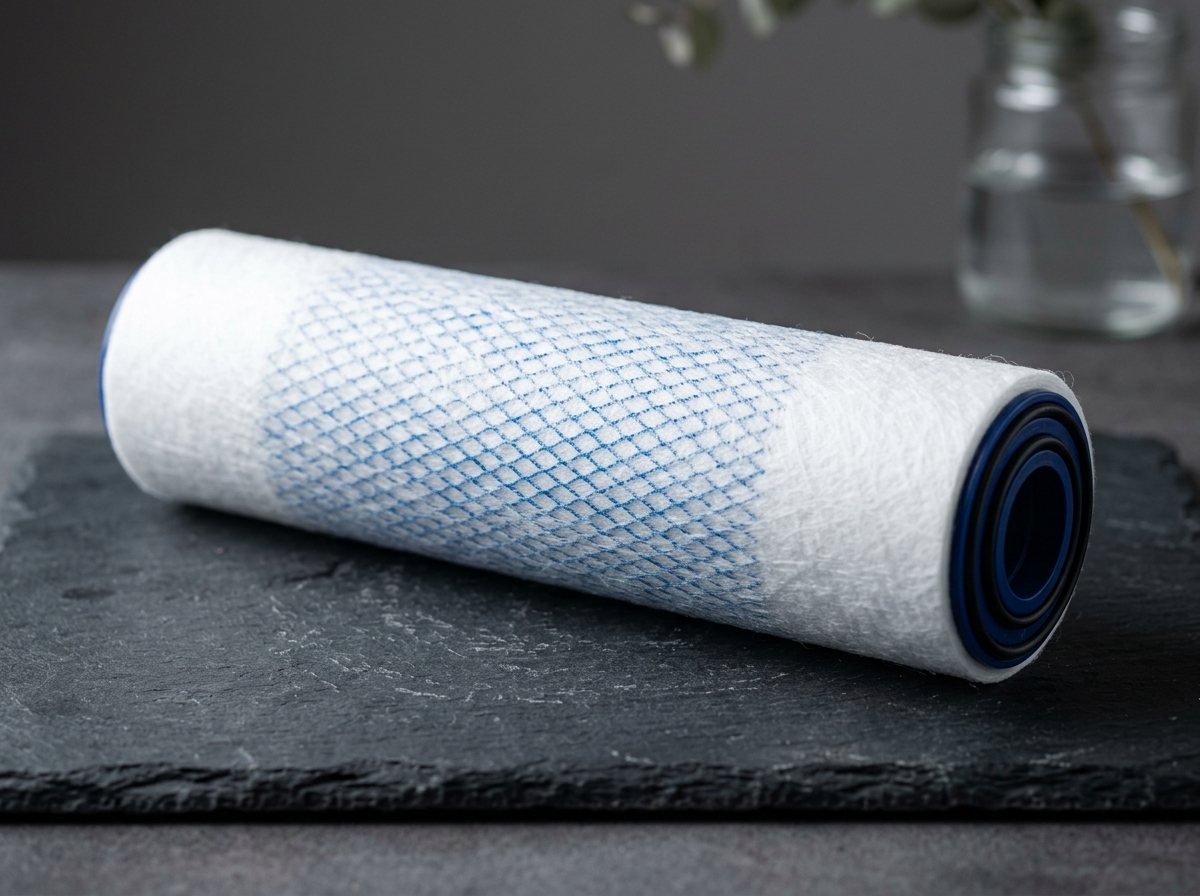
Trace every drop of water step by step inside a purifier cabinet to understand how each RO purifier spare part works together—and how to spot the failing part quickly.
How water flows through an RO purifier (stage order)
Every reverse osmosis system follows a strict hydraulic sequence. Raw tap water passes through physical and chemical pre-treatment first, enters a solenoid valve and pressure switch, gets pressurized by a booster pump, divides inside the RO membrane into pure permeate and high-TDS reject streams, and finally passes through taste polishing before filling the storage tank.
Knowing this stage order lets you trace faults logically from inlet to outlet instead of replacing parts blindly. If water stalls before the pump, the issue sits in pre-filtration or the LPS; if drain water pours continuously while idle, look directly at the SV.
Pre-filtration stage (spun, housing, sediment & pre-carbon)
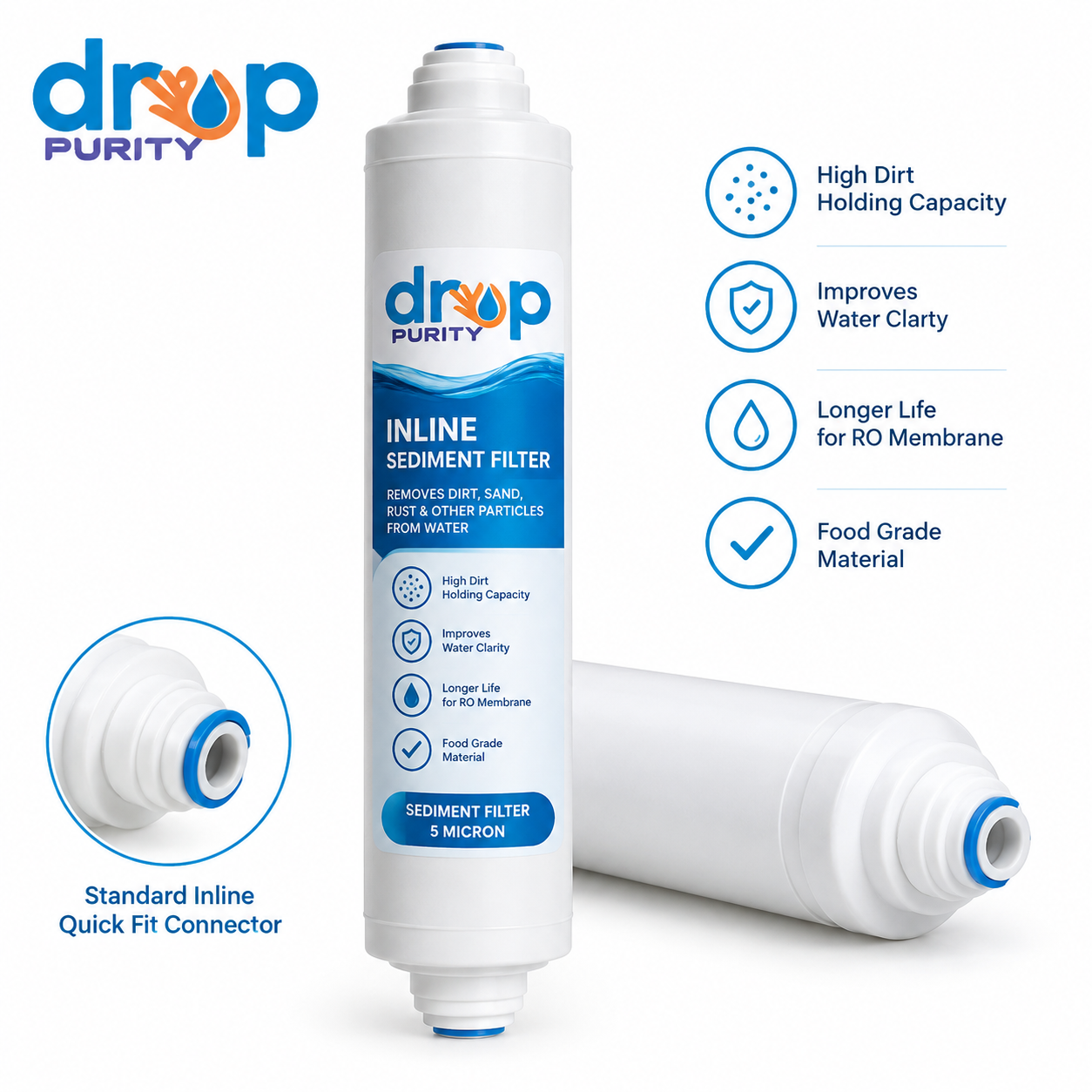
First contact happens inside the external filter housing containing a PP spun cartridge. This mechanical sieve blocks sand, scale flakes, and rust particles. Inside the cabinet, the inline sediment filter traps finer silt down to micron level.
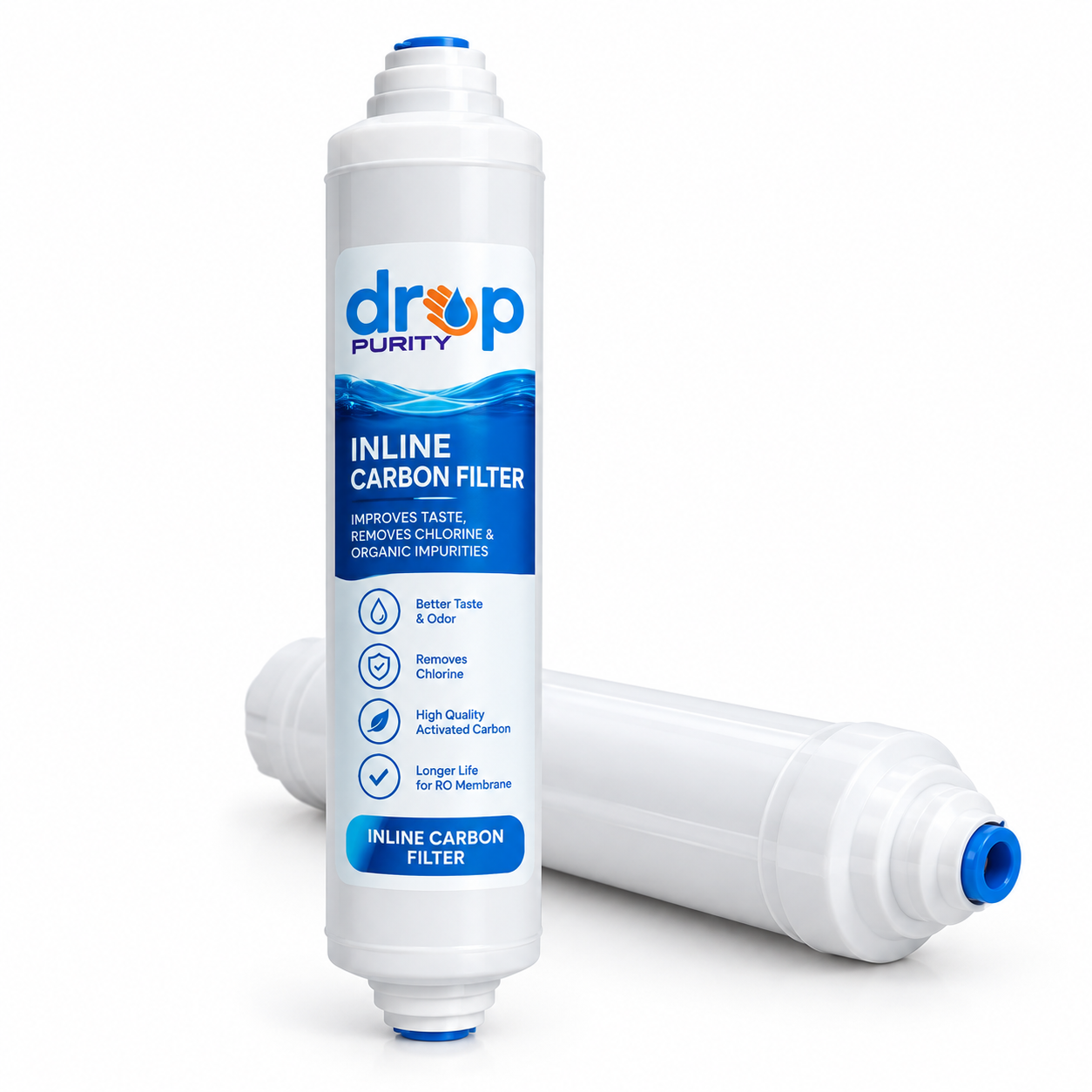
Next is the pre-carbon stage, using activated coconut-shell carbon inside an inline carbon filter to adsorb chlorine and organic odors. Chlorine oxidizes polyamide TFC membrane sheets rapidly, so healthy pre-carbon protects your most expensive filtration part.
RO membrane stage and flow restrictor
Pressurized pre-filtered water enters the membrane housing holding the spiral-wound RO membrane. Under booster pressure, pure water molecules cross the semi-permeable TFC layers toward the central permeate stem while dissolved salts stay on the reject side.
Exiting the reject port is the Flow Restrictor (FR). Rather than letting pressurized water escape freely, the calibrated capillary bore inside the FR holds enough pressure inside the membrane vessel for separation while constantly flushing rejected hardness down the drain line.
Post-carbon & final taste polishing stage
After leaving the membrane's pure outlet—or passing from the pressurized tank depending on cabinet plumbing—water passes through a final post-carbon filter stage. Even cleanly separated RO permeate benefits from polishing to remove lingering flat storage taste or slight plastic odor.
Some installations also include an anti-scalant cartridge upstream of the membrane in borewell areas to help reduce calcium and magnesium scaling inside the feed spacers.
Pump, SMPS and electrical valves
On the power side, an external or internal 24V SMPS feeds a 24V booster pump and a 24V Solenoid Valve (SV). The SV remains shut when power is off so raw supply never bleeds down the waste pipe overnight.
In series with power sits the Low Pressure Switch (LPS). If raw supply pressure disappears, the LPS opens the circuit so the booster pump pauses safely until inlet pressure returns. Systems equipped with an auto flush valve also perform a brief high-flow rinse across the membrane surface.
Tank, float switch and dispenser tap
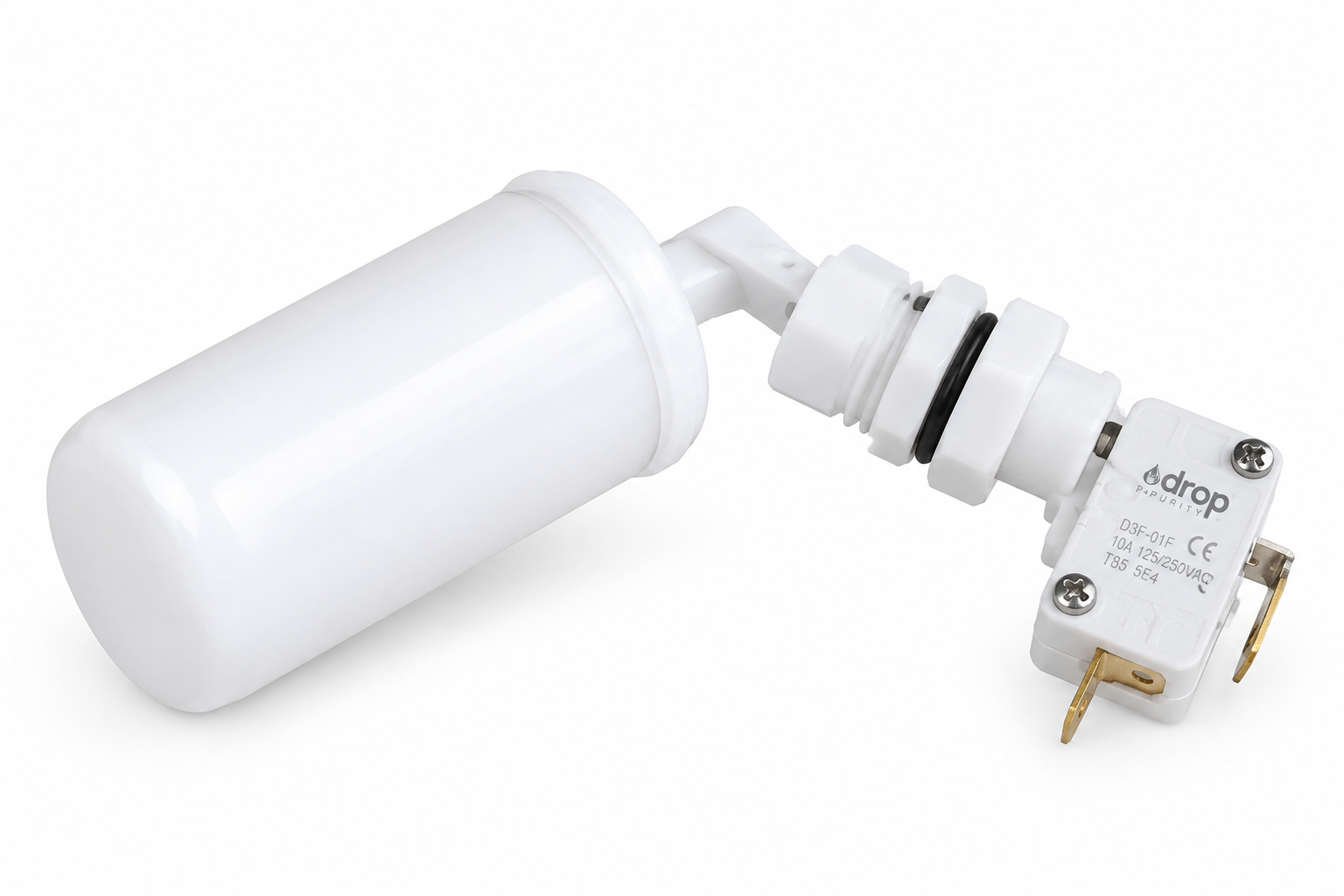
Purified water collects in the storage tank where a float switch monitors water level. Once the float arm rises to full height, its micro-switch opens, stopping both the booster pump and SV cleanly.
All internal plumbing runs via food-grade 1/4-inch tubing and push-fit elbows available in our pipe and fittings pack, delivering drinking water cleanly through the front purifier tap. You can see detailed part cards in our Know Your RO guide.
Quick reference: part → job → sign of failure
Use this quick symptom summary whenever inspecting RO water purifier parts before ordering a replacement. Matching symptom to component prevents unnecessary swaps and keeps maintenance costs low.
- PP Spun / Inline Sediment → Traps mud, rust, silt → Severe drop in both pure and reject flow.
- Inline Carbon → Removes chlorine and chemical odor → Chlorine smell or early membrane damage.
- RO Membrane → Reduces dissolved TDS → Pure water TDS rises close to raw feed TDS.
- Flow Restrictor (FR) → Maintains membrane pressure → Zero drain flow or choked recovery.
- 24V Booster Pump / SMPS → Builds pressure → Purifier dead (SMPS) or noisy/low flow (pump).
- Solenoid Valve (SV) → Cuts raw supply when off → Waste pipe keeps draining with power off.
- Float Switch → Cuts power on full tank → Storage tank overflows or fails to restart.
Shop parts from this guide

Frequently Asked Questions
What happens if an RO purifier is run without a Solenoid Valve (SV)?
Raw water keeps pushing into the membrane and out of the drain pipe continuously even when the purifier is switched off or the tank is full.
Why does the booster pump sit after the pre-filters instead of before?
Pre-filtering out sand and silt first protects the booster pump diaphragm and check valves from grit abrasion.
Which part prevents the storage tank from overflowing?
The float switch (tank level micro-switch) cuts electrical supply to the pump and SV once water reaches full capacity.